
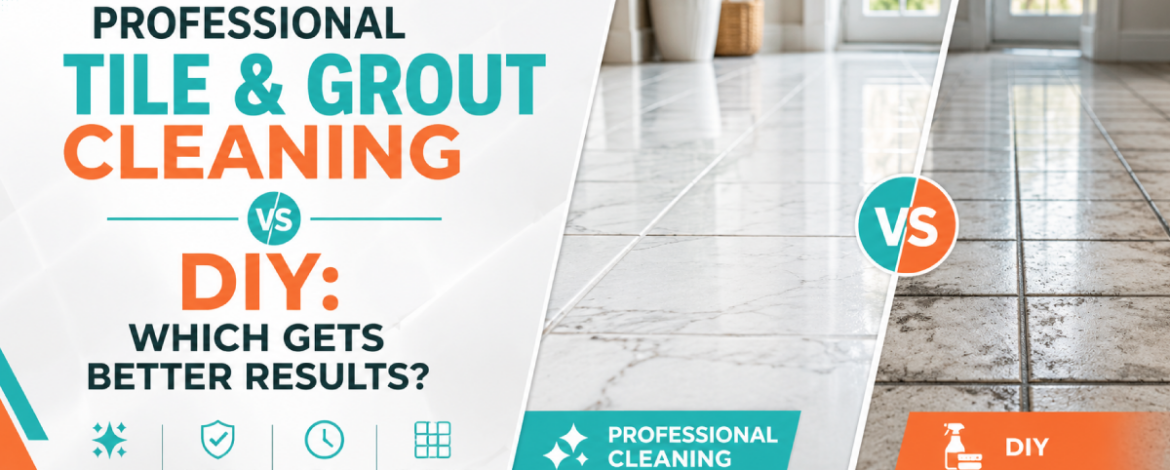
Walk into any beautiful home in Melbourne, and the first thing that catches your eye is a clean, expansive floor. But over time, high foot traffic, spilled coffee, and everyday dust turn those bright floors dull. Worse, the white grout lines between your tiles slowly morph into a muddy brown or gray.
When your floors reach this point, you face a common dilemma: do you spend your weekend on your hands and knees with a toothbrush, or do you call in a specialist? Choosing between home remedies and tile and grout cleaning from a specialist isn’t just about saving time—it impacts the lifespan of your floors, the safety of your family, and the visual appeal of your property.
This comprehensive guide breaks down the science of hard surface maintenance, compares home cleaning remedies to commercial-grade systems, and reveals which approach delivers the best return on your investment.
What is Tile and Grout Cleaning and Why Does It Matter?

At its core, tile and grout cleaning is the process of removing deep-seated dirt, grease, bacteria, and stains from both the resilient tile surface and the porous channels between them.
While ceramic and porcelain tiles are generally non-porous and easy to wipe down, grout is an entirely different story. Grout is typically made from a mixture of cement and sand. Because it is highly porous, it acts like a microscopic sponge, absorbing liquids, mop water, oils, and bacteria deep beneath the surface.
Regular mopping often makes the problem worse. As a mop moves across the floor, it lifts dirt off the tile and deposits it directly into the lower-lying grout lines. Over months, this creates a buildup that standard household cleaners simply cannot reach. Proper maintenance restores the visual contrast between your tile and grout while eliminating hidden allergens and mold spores.
The Reality of DIY Tile Cleaning
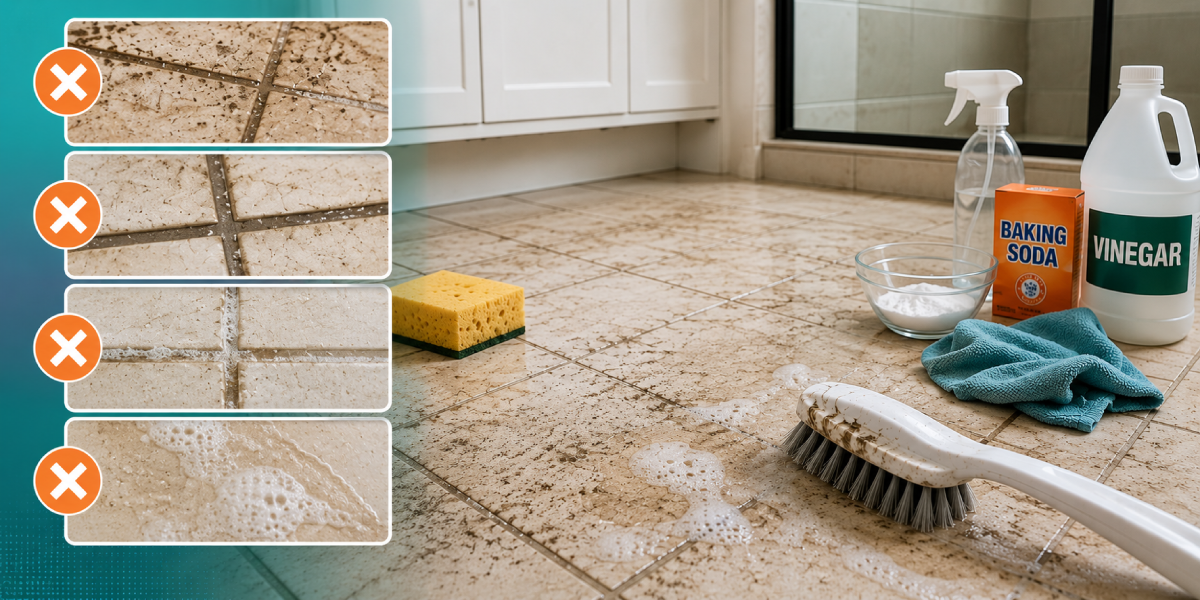
For many homeowners, the natural first instinct is to try a DIY tile cleaning project. Grocery store shelves are packed with dedicated grout cleaners, and the internet is full of “hack” formulas promising pristine results.
Common Home Cleaning Methods
- Baking Soda and Vinegar: A popular green remedy where a base and an acid react to create fizzing action meant to lift dirt.
- Oxygen Bleach Powders: Mixed with water to create a paste left to sit on the grout lines to bleach out stains.
- Retail Grout Brushes: Stiff-bristled hand brushes designed to manually agitate the cleaning solutions inside the lines.
| ⬩➤ Feature Reading:- How to Deep Clean Tile Grout: The Ultimate Restoration Guide |
The Hidden Risks of Household Chemicals
While these methods can lighten surface stains temporarily, they carry hidden risks.
Vinegar is highly acidic. When applied repeatedly to cementitious grout, it breaks down the chemical bonds of the cement, causing the grout to slowly erode, crumble, and weaken over time.
Additionally, heavy hand-scrubbing with aggressive bristles can strip away the protective grout sealer, opening up the pores to even faster discoloration in the future.
The Professional Advantage: Commercial Systems

A grout cleaning service approaches the problem using specialized chemistry and physics rather than raw muscle power. Specialists use high-end tile cleaning equipment that balances heat, pressure, and vacuum extraction simultaneously.
Advanced Extraction Tech
Professional operators utilize truck-mounted or high-powered portable extraction systems. These machines heat water to over 90°C (200°F) and apply it at controlled pressures ranging from 800 to 1,200 PSI.
As the superheated water breaks down grease and emulsifies soil, a high-volume vacuum shroud instantly extracts the dirty water out of your home. This prevents the slurry from resettling into the floor.
Tailored Treatment Solutions
Unlike a one-size-fits-all spray bottle from the supermarket, a professional tile cleaning technician analyzes your specific flooring. They choose alkaline pre-treatments for heavy grease in kitchens, mild acidic detergents for efflorescence (salt buildup) in bathrooms, and specialized emulsifiers for delicate natural stone like marble or travertine.
| ⬩➤ Feature Reading:- How to Clean Tile Grout: The Ultimate DIY Guide |
Side-by-Side Comparison: Pro vs. DIY
| Feature | DIY Tile Cleaning | Professional Tile Cleaning |
| Primary Method | Manual scrubbing, retail chemicals | Hot water extraction, targeted chemistry |
| Deep Stain Removal | Surface-level lightening only | Extracts embedded oils and deep pigments |
| Time Investment | 6 to 12 hours of manual labor | 1 to 3 hours for an entire home |
| Drying Time | 12 to 24 hours (excess pooling water) | 1 to 2 hours (high-power vacuum removal) |
| Risk of Damage | High (acid erosion, scratched glaze) | Extremely low (calibrated pressure and pH) |
| Longevity | Weeks (attracts dirt if residue is left) | Months to years (especially when sealed) |
Is Professional Tile Cleaning Better Than DIY?

Quick Answer: Yes, professional tile cleaning provides significantly better results than DIY methods. While DIY cleaning only removes surface-level dirt and risks eroding grout through harsh acids or scrubbing, professional services use superheated water extraction (above 90°C) and balanced, non-toxic chemistry. This process safely extracts embedded contaminants from deep within porous grout lines, sanitizes the floor, and restores the original look without leaving chemical residues that attract new dirt.
Common DIY Mistakes to Avoid
If you do choose to tackle your floors at home, avoid these frequent pitfalls that professional technicians see daily:
- Using Dish Soap or Multi-Purpose Cleaners: These products leave behind a microscopic, sticky chemical film. Even if the floor looks clean initially, this residue acts like a magnet for dust and oil, causing the floor to re-soil twice as fast.
- Over-Wetting the Floor: Flooding your tile with mop water pushes dirty liquid deep into the grout joints and underneath loose tiles, creating a breeding ground for sub-floor mold.
- Using Wire Brushes: Metal bristles scrape away the protective glaze on ceramic tiles and gouge channels out of your grout lines, permanently ruining your tile floor cleaning efforts.
- Mixing Bleach and Acids: Mixing different cleaning agents can generate dangerous chemical vapors, creating an immediate safety hazard inside your home.
| ⬩➤ Feature Reading:- Best Tile Cleaner Liquids for Floors and Bathrooms |
Step-by-Step: The Professional Restoration Process

To understand why commercial methods yield superior outcomes, look at the systematic protocol a dedicated technician follows during a deep tile cleaning service:
Step 1: Pre-Inspection and Testing
The technician identifies the tile type (ceramic, porcelain, terracotta, or stone) and tests the grout stability. This ensures the appropriate pressure and chemical balance are selected to prevent finish damage.
Step 2: Targeted Pre-Treatment
A specialized, non-toxic emulsifier is applied directly across the floor. This solution dwells on the surface for 10 to 15 minutes to break down organic oils, cooking grease, and ground-in dirt.
Step 3: Mechanical Agitation
The technician uses a counter-rotating brush machine to gently work the cleaner into every crevice, loosening stubborn debris without scratching the tile face.
Step 4: Hydro-Extraction
Using a enclosed vortex cleaning tool, superheated water is injected into the tile and grout while a powerful vacuum removes the soil and liquid instantly.
Step 5: Grout Sealing (Optional but Recommended)
Once dry, a clear or color sealer is applied to the grout lines. This fills the microscopic pores, acting as a shield that prevents future spills from soaking into the grout matrix.
| ⬩➤ Feature Reading:- Removing Dog Urine from Tiles and Grout |
Eco-Friendly Care Tips for Long-Lasting Floors

Maintaining your floors doesn’t require harsh chemicals. At Tile Cleaners Melbourne, we value your home’s safety and environment. We use non-toxic, pet-safe products that don’t emit chemical fumes.
Between professional deep cleans, keep your floors in top condition with these smart, sustainable tile cleaning tips:
- Use Microfiber Mops: Swap out old cotton string mops for damp microfiber pads. Microfiber lifts and holds dirt rather than pushing it around into the grout lines.
- Clean Up Spills Immediately: Don’t let liquids sit on the floor. Wipe up coffee, wine, or juice immediately to prevent them from penetrating the grout pores.
- Use pH-Neutral Cleaners: Look for specialized stone and tile soaps that are explicitly labeled as pH-neutral (pH 7). Plain warm water is often enough for weekly touch-ups.
- Vacuum Before Mopping: Always dry-vacuum or sweep your floors to remove loose sand and grit before introducing moisture. This prevents you from creating a muddy slurry that settles into the grout joints.
Frequently Asked Questions
Is professional tile cleaning better than DIY?
Yes. Professional methods remove deep-seated contaminants that household scrubbing cannot reach. Using specialized truck-mounted equipment and targeted, non-toxic formulas, professionals extract dirt without leaving behind soapy residues or causing structural wear to your grout joints.
Can DIY products remove deep grout stains?
Rarely. Retail products can lighten surface stains temporarily, but they cannot lift deeply embedded oils, dyes, or mold pigments. Stubborn discoloration requires deep grout stain removal via hot water extraction to thoroughly flush out the porous structure of the cement.
How long does professional tile cleaning last?
A professional deep clean typically lasts between 12 to 24 months. This timeline depends heavily on household foot traffic, whether a protective sealer was applied after cleaning, and your weekly maintenance routine.
Is steam cleaning safe for tiles?
Professional steam tile cleaning—which uses regulated temperature and pressure—is completely safe for most ceramic, porcelain, and stone surfaces. However, unregulated retail steam mops can sometimes cause thermal shock to delicate glazes or crack weakened grout if held in one spot for too long.
How much does professional tile cleaning cost?
Pricing varies depending on total square footage, the type of tile material, and whether you require a clear or color grout seal. Getting a tailored quote for grout cleaning Melbourne ensures you pay only for the specific treatment your layout needs.
When should I hire a tile cleaning service?
You should call a professional if your grout lines remain dark and discolored after mopping, if you notice a sticky residue on your feet, or if you are moving into a new property and want to sanitize the surfaces. An annual deep clean is a smart way to protect your property investment.
Conclusion: Investing in Your Home’s Value
While a weekend DIY tile cleaning project might seem like a budget-friendly option, the physical effort, risk of chemical erosion, and temporary results often cost more in the long run. Choosing professional tile and grout cleaning saves your time, ensures a deep clean without toxic residues, and extends the lifespan of your floors.
At Tile Cleaners Melbourne, we take great pride in helping our neighbors restore their properties safely and efficiently. Our advanced, non-toxic cleaning processes deliver exceptional results in just a few hours, leaving your rooms clean, fresh, and ready for use.
Ready to see your floors transform? Contact the team at Tile Cleaners Melbourne today to book a professional deep clean and bring the shine back to your home.

Leave A Comment