
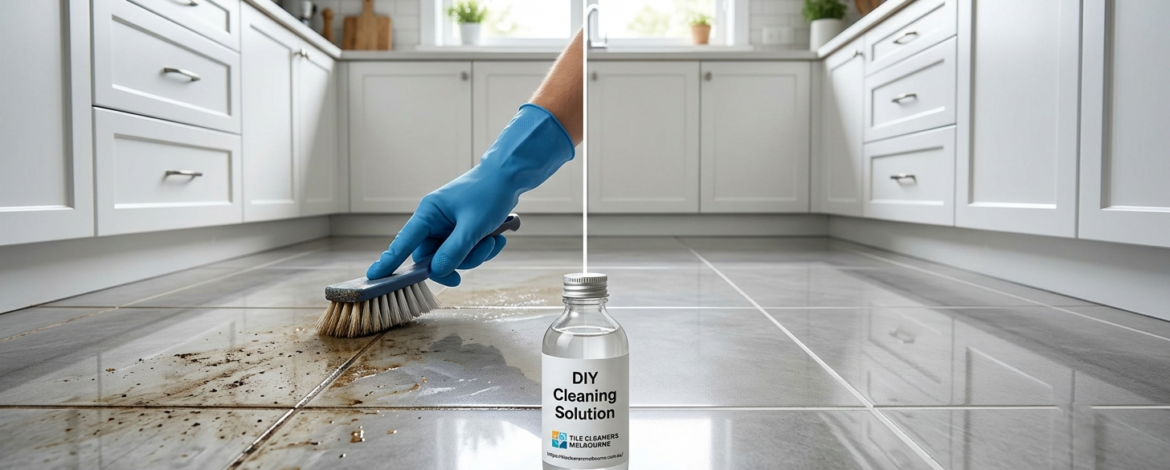
Few things sabotage a beautiful kitchen or bathroom like dingy, discolored grout lines. You can scrub your ceramic or porcelain tiles until they shine, but if the spaces between them are stained with grease, mildew, or ground-in dirt, the whole room looks neglected.
Learning how to clean tile grout effectively doesn’t require expensive machinery or toxic chemicals. In this comprehensive DIY guide, we will break down the science of grout staining, explore what is best to clean tile grout safely, and provide step-by-step methods to restore your floors and walls to their original glory.
Understanding Tile Grout: Why It Gets So Dirty
Before grabbing a scrub brush, it helps to understand what you are actually cleaning.
What is Tile Grout?
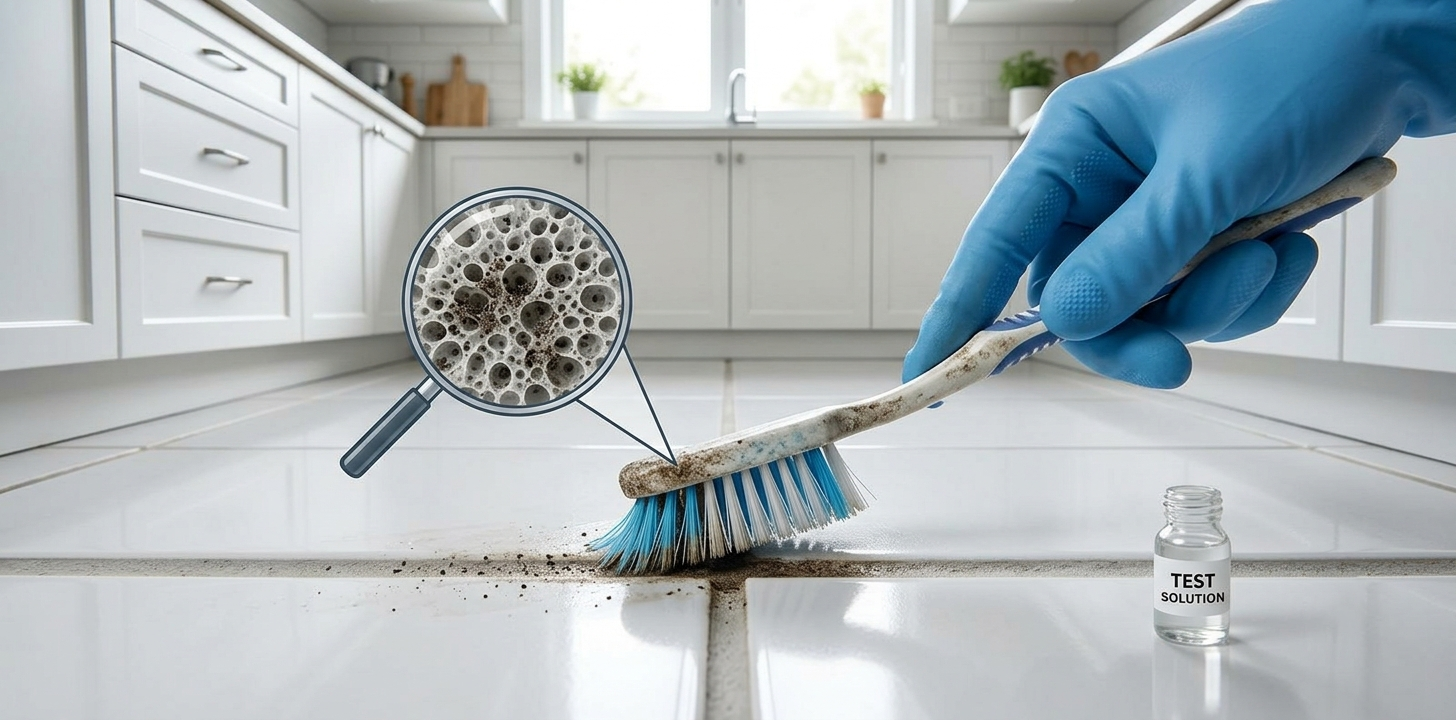
Grout is a dense mixture of water, cement, and sand (or a sandless polymer). It is used to fill the spaces between tiles, stabilize the installation, and prevent tile edges from chipping.
Why Does Grout Stain So Easily?
Because cement-based grout is highly porous, it acts like a hard sponge. Unless it is perfectly sealed, it will absorb anything it comes into contact with:
- Bathrooms: Soap scum, body oils, shampoo residue, and moisture that breeds mold and mildew.
- Kitchens: Cooking oils, spilled coffee, dropped food, and pet dander.
- Entryways: Fine mud, street salt, and ground-in microscopic dirt.
| Further Reading: |
Quick Guide: How Do You Clean Tile Grout Safely?
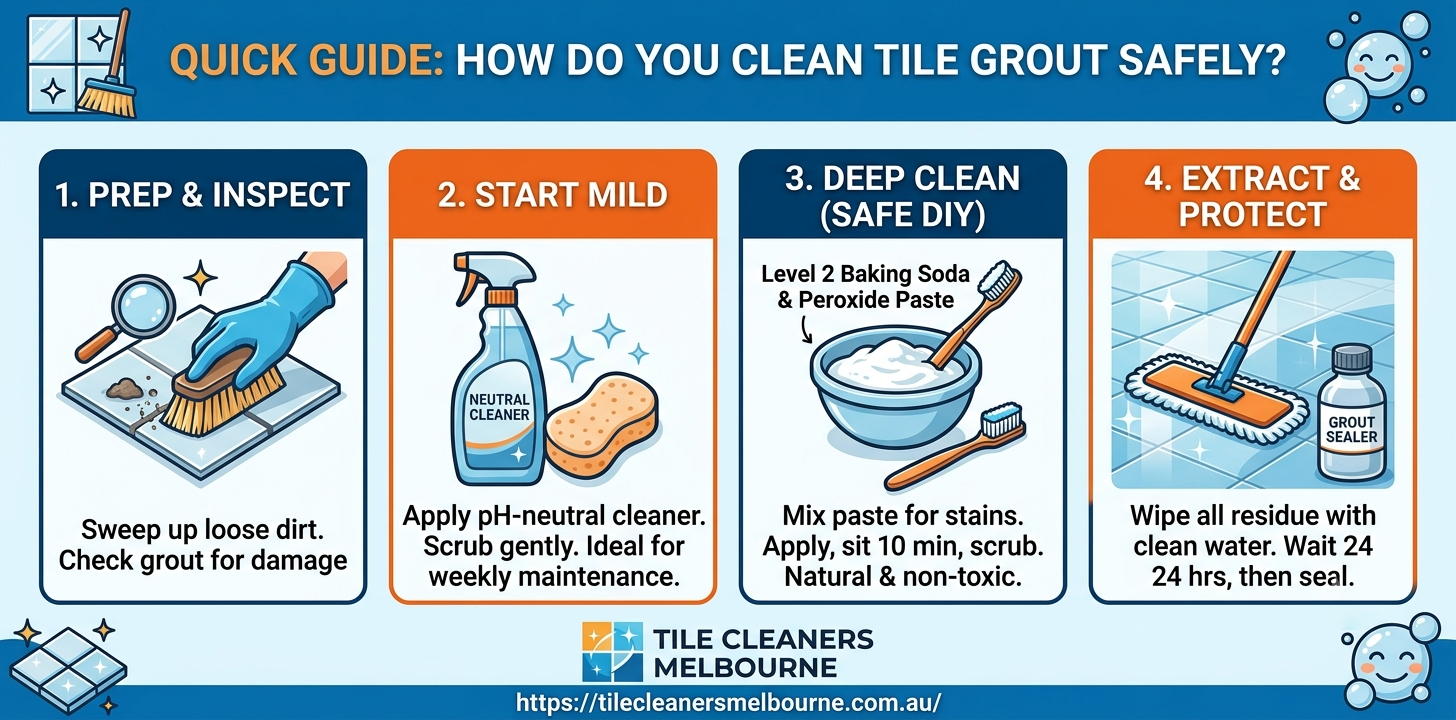
If you want the fast version of how to clean grout on tile, use this progressive framework. Always start with the mildest cleaning solution and work your way up to stronger chemical agents to protect your tile installation.
| [Level 1: Warm Water & Brush] ➔ [Level 2: Baking Soda & Hydrogen Peroxide] ➔ [Level 3: Commercial Grout Cleaner] |
The Quick-Reference Cleaning Matrix
| Stain Severity | Recommended Cleaner | Tools Needed | Best For |
| Light Dirt | Warm water or mild dish soap | Stiff nylon brush | Routine weekly maintenance |
| Moderate Stains | Baking soda + Hydrogen peroxide paste | Grout brush or old toothbrush | Kitchen grease, surface discoloration |
| Mold & Mildew | Diluted oxygen bleach or specialized enzyme cleaner | Spray bottle & scrub brush | Showers, high-humidity zones |
| Deep / Ancient Stains | Commercial alkaline grout cleaner | Heavy-duty grout brush | Neglected floors, move-in cleanings |
| Further Reading: |
The Best DIY Methods to Clean Grout Between Tiles
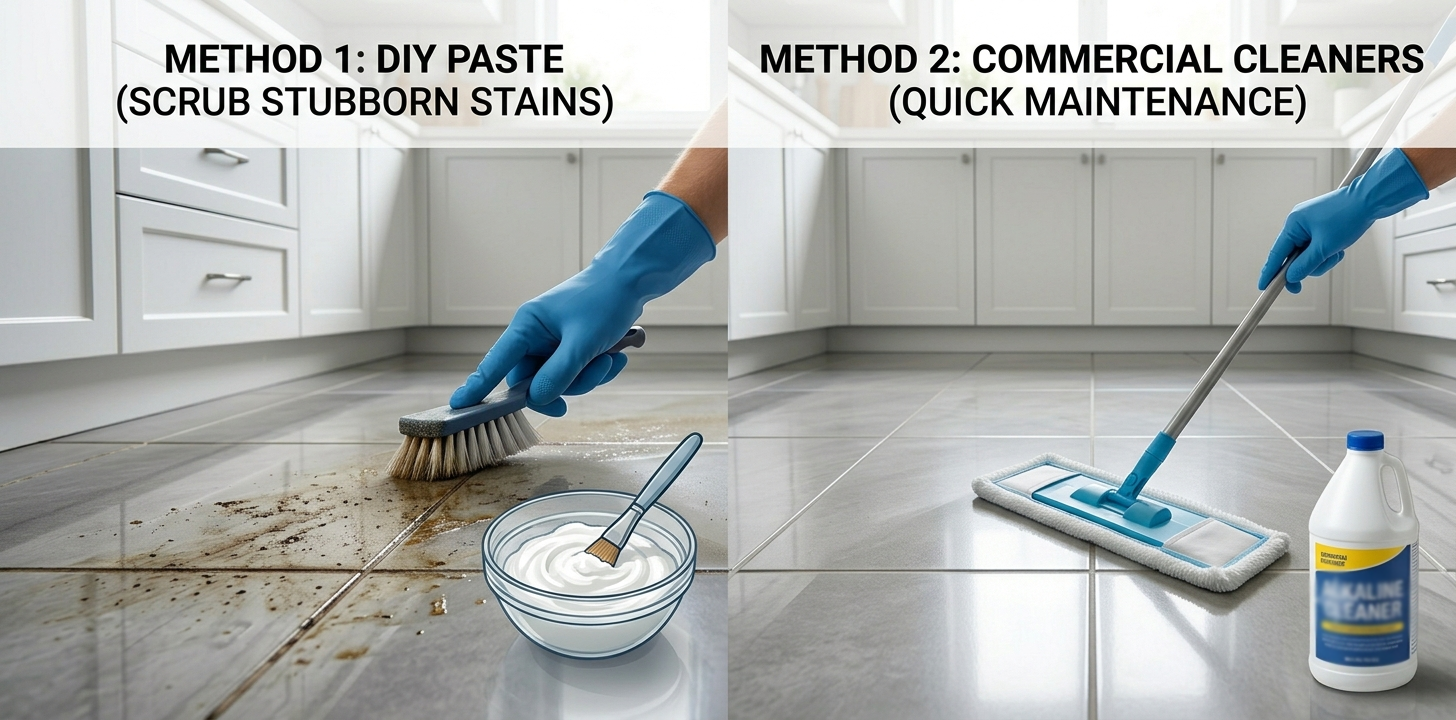
When figuring out how can I clean grout between tiles without ruining the surrounding stone or ceramic, these four tested methods deliver the highest success rates.
Method 1: The Eco-Friendly Baking Soda and Peroxide Paste
This is widely considered the best DIY method because it combines a mild abrasive (baking soda) with a natural bleaching agent (hydrogen peroxide).
- Mix the Paste: Combine two parts baking soda with one part hydrogen peroxide in a small bowl until it forms a toothpaste-like consistency. For greasy kitchen floors, add a few drops of liquid dish soap.
- Apply to Grout Lines: Use a gloved finger or an old toothbrush to spread the paste directly onto the dirty grout.
- Let it Sit: Allow the mixture to fizz and work its way into the pores for 10 to 15 minutes.
- Scrub: Agitate the grout line using a stiff-bristled brush in small, circular motions.
- Rinse: Wipe away the residue with a damp microfiber cloth, rinsing the cloth frequently in clean water.
Method 2: Oxygen Bleach Powder (Oxygenated Percarbonate)
Unlike harsh chlorine bleach, oxygen bleach is non-toxic, odorless, and color-safe for tinted grouts.
- Dissolve the Powder: Mix 2 tablespoons of oxygen bleach powder into 2 cups of warm water. Ensure it dissolves completely.
- Flood the Lines: Pour the solution onto the grout lines, ensuring they are completely saturated.
- Dwell Time: Let the solution sit for 15–20 minutes. Do not let it dry out; add a little more solution if necessary.
- Scrub and Wipe: Scrub vigorously, then mop up the dirty liquid with a clean bucket of water.
Method 3: Commercial Alkaline Cleaners
When household DIY ingredients fail, professional tile setters recommend alkaline-based commercial cleaners.
🎓 Expert Note: Avoid acid-based commercial cleaners for regular maintenance. Acids strip away a microscopic layer of the grout cement every time they are used, eventually causing the grout to crumble and fail.
- Spray the commercial cleaner generously over a $4 \times 4$ foot section of tile.
- Allow it to sit for the manufacturer’s recommended dwell time (usually 5–10 minutes).
- Scrub using a specialized V-shape grout brush.
- Use a wet-dry vacuum or clean microfiber mops to extract the dirty water rather than pushing it back into the grout lines.
Common Mistakes to Avoid When Cleaning Grout
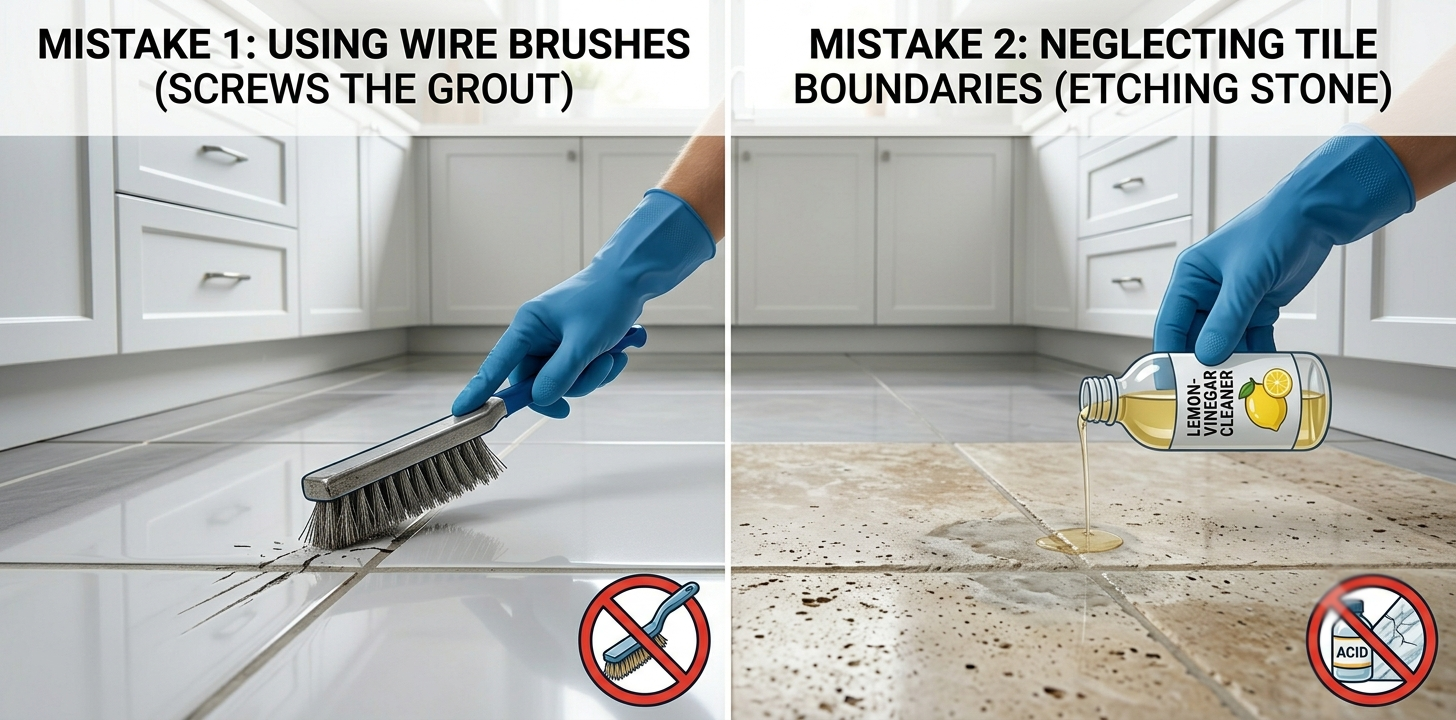
Knowing what not to do is just as crucial as knowing how do you clean tile grout. Avoid these common pitfalls to protect your floors:
- Using Wire Brushes: Metal or steel wool brushes will scrape out the grout itself and can permanently scratch ceramic, porcelain, or natural stone tile glaze.
- Relying on Chlorine Bleach: Regular household liquid bleach sanitizes, but it can fade colored grouts, weaken the structural integrity of cement over time, and leave a toxic residue.
- Ignoring Natural Stone Boundaries: If you have marble, limestone, travertine, or slate tiles, never use vinegar, lemon juice, or acidic cleaners. The acid will instantly etch the stone, leaving dull, permanent white marks.
- Leaving the Surface Wet: Pushing dirty mop water across a tile floor simply redistributes dissolved dirt straight back into the porous grout lines. Always wipe or vacuum up dirty water.
| Further Reading: |
Pro Tips for Long-Term Maintenance
- Seal the Grout: Once your grout is completely clean and fully dry (wait 24 hours), apply a high-quality penetrating grout sealer. This creates a hydrophobic barrier that repels liquids, oils, and dirt.
- Change Mop Water Frequently: When mopping your tile floors, change your water bucket as soon as it looks cloudy. Otherwise, you are essentially painting your grout lines with dirty water.
- Run Exhaust Fans: In bathrooms, leave the exhaust fan running for at least 20 minutes after a shower to pull moisture out of the air and discourage mold growth.
| Further Reading: |
FAQ
How do you clean tile grout effectively?
The most effective way to clean tile grout is to apply a targeted cleaner (like a baking soda and hydrogen peroxide paste), allow it a 10-to-15-minute “dwell time” to break down subsurface grime, and scrub it using a stiff nylon brush in circular motions before wiping the residue away with clean water.
What is the best cleaner for tile grout?
For daily or weekly cleaning, a neutral-pH tile and stone cleaner is best. For deep restoration cleaning on standard sanded grout, a professional alkaline grout cleaner or a homemade oxygen bleach solution yields the most dramatic results without eroding the cement structure.
Can baking soda and vinegar clean grout?
While popular online, mixing baking soda (a base) and vinegar (an acid) in a bowl creates a chemical reaction that yields mostly water and sodium acetate, neutralizing the cleaning power of both. It is far more effective to use baking soda mixed with hydrogen peroxide, or to apply baking soda to the floor first and lightly spray vinegar on top to let the active bubbling action lift surface dirt. Note: Never use vinegar if your tile is natural stone.
How often should tile grout be cleaned?
Tile floors should be vacuumed or swept twice a week and mopped weekly with a pH-neutral cleaner. A deep grout clean and re-sealing should be performed once every 12 to 18 months, depending on foot traffic and household activity.
When should grout be professionally cleaned?
You should consider hiring a professional tile and grout cleaning service if the grout lines remain pitch-black or stained after multiple DIY attempts, if the grout is actively crumbling, or if you are dealing with widespread black mold infestation that has penetrated beneath the tile surface.
Summary and Next Steps
Mastering how to clean tile grout doesn’t require a massive budget, just the right strategy and a bit of elbow grease. By starting with gentle solutions like baking soda and hydrogen peroxide, respecting the material limits of your specific tile, and sealing your grout lines once they are pristine, you can keep your tiled surfaces looking brand new for decades.
Ready to transform your home? Pick one room, mix up a quick batch of DIY paste, and watch those stubborn stains disappear!

Leave A Comment