

Relying on any service for your home requires a high degree of trust. After all, your outdoor living spaces, alfresco areas, and pool surrounds are investments you live with every single day. Across Melbourne and the Mornington Peninsula, homeowners take immense pride in their properties, but outdoor tiles face constant exposure to harsh UV rays, heavy rains, leaf tannin stains, and persistent algae. When outdoor entertainment areas become dull or dangerously slippery, many homeowners attempt a quick DIY fix with a hire-shop washer.
Unfortunately, without professional expertise, DIY attempts often lead to severe pressure cleaning mistakes—from gouging soft sandstone and chipping delicate glaze to blasting out aged grout lines and forcing moisture beneath the sub-base.
Knowing how professionals clean outdoor tiles makes it easy to understand why commercial tile and grout cleaning services deliver dramatically superior, long-lasting results. This guide breaks down the specialized equipment, pre-treatment chemistry, controlled pressure techniques, and grout sealing methods used by industry experts to restore outdoor tiles without surface damage.
What is a Pressure Cleaning Mistake?
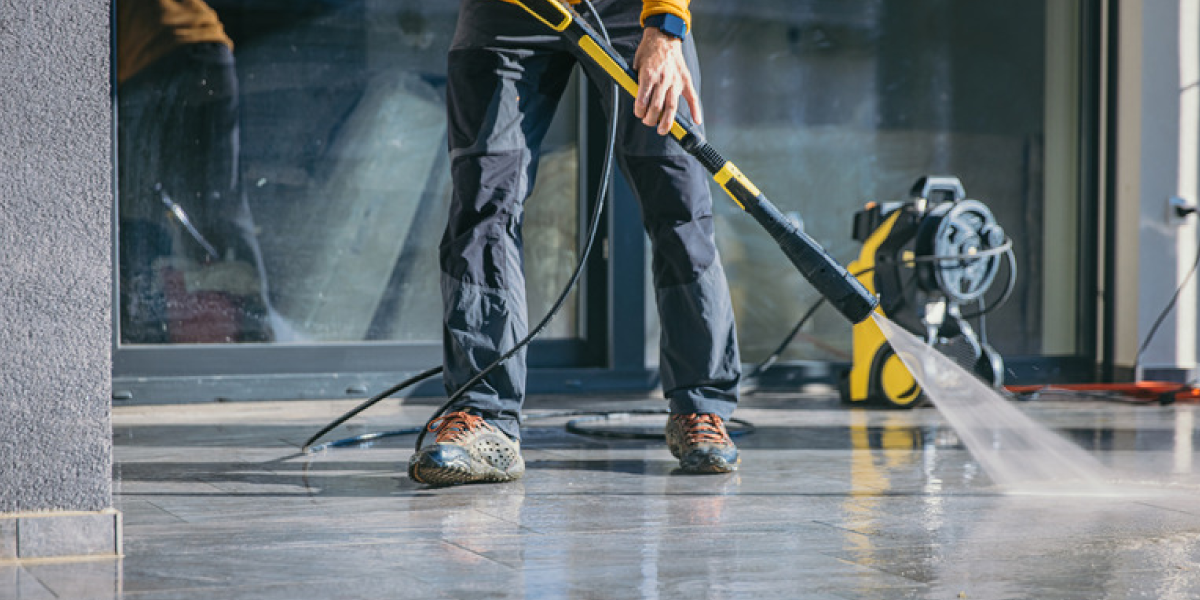
A pressure cleaning mistake occurs when an operator uses incorrect water pressure (PSI), inappropriate nozzle spray angles, excessive heat, or improper chemical pre-treatments on exterior hardscapes.
Rather than restoring the surface, improper pressure cleaning physically degrades the tile or grout matrix. Because different outdoor tile materials—such as vitrified porcelain, terracotta, bluestone, travertine, and sandstone—possess vastly different density levels and absorption rates, a one-size-fits-all approach to pressure cleaning outdoor surfaces almost always leads to structural or cosmetic harm.
DIY vs. Professional Cleaning Methods
| Operational Aspect | DIY Pressure Washing Approach | Professional Restoration Approach |
| Primary Method | Raw, high-pressure water blasting | Chemical breakdown + controlled rinsing |
| Initial Inspection | None (Immediate spraying) | Substrate testing & porosity assessment |
| Cleaning Equipment | Open wand with narrow nozzle (15°/0°) | Enclosed rotary surface cleaner & extraction |
| PSI Regulation | Fixed, high pressure (2,500+ PSI) | Calibrated PSI matched to tile density |
| Grout Line Safety | High risk of erosion and blowouts | Cleaned diagonally at safe pressure levels |
| Long-Term Result | Surface dirt removed; stone often etched | Surface restored; protected with sealant |
How do professionals clean outdoor tiles?
Professionals clean outdoor tiles using a multi-stage restoration process: inspecting surface porosity, applying non-toxic commercial pre-treatments to dissolve grime, scrubbing stubborn micro-pores, rinsing with rotary surface cleaners at controlled PSI settings, and applying penetrating fluoropolymer sealers to protect tiles and grout from future staining.
Quick Answer: How Professionals Avoid Damage During Tile Cleaning
| Cleaning Phase | DIY Approach | Professional Approach | Benefit of Professional Method |
| Inspection | None (Immediate blasting) | Material & porosity testing | Prevents using wrong pressure on soft stone |
| Chemistry | Harsh acids or raw water | Eco-friendly pH-balanced pre-wash | Breaks down organic roots without etching |
| Equipment | Wand with 0°/15° tip | Enclosed rotary surface cleaner | Eliminates zebra streaks and wand gouges |
| Pressure Control | Unregulated high PSI | Calibrated PSI (500–1,800 PSI) | Preserves tile glaze and prevents grout blowout |
| Post-Wash Care | Left unsealed | Penetrating sealer application | Blocks moisture, oil, and algae re-colonization |
Why Avoiding Pressure Cleaning Mistakes Matters
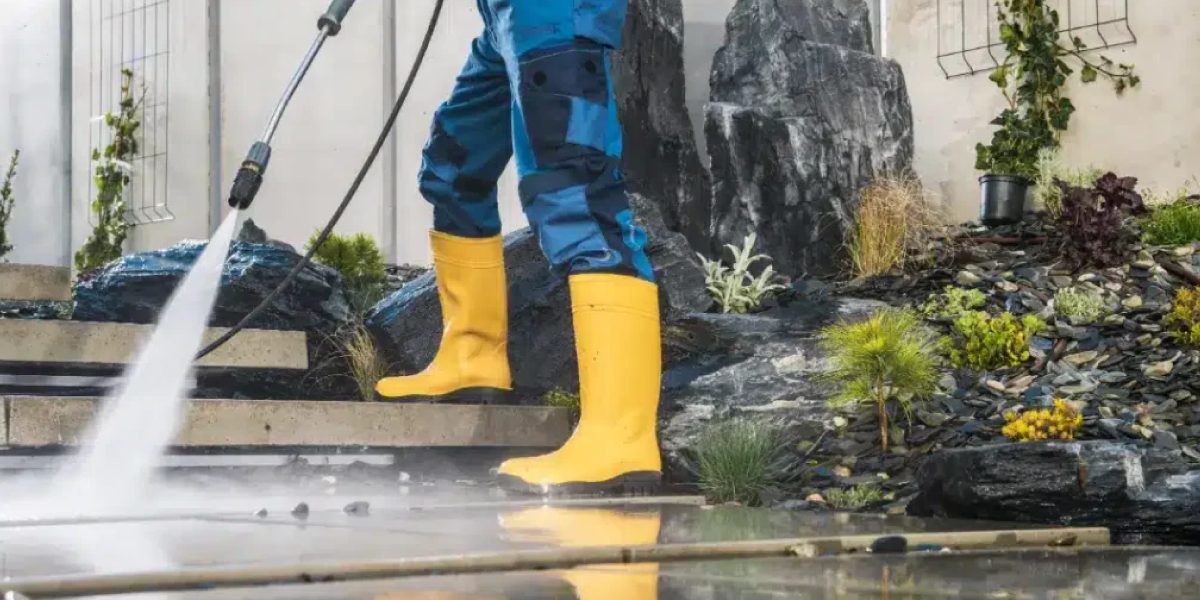
Attempting to clean outdoor tiles without understanding surface mechanics carries real financial and aesthetic risks.
1. Preventing Irreversible Surface Etching
Porcelain tiles are non-porous and resilient, but natural stones like travertine, limestone, and sandstone are comparatively soft and porous. Blasting soft stone with high-velocity water strips natural binding minerals, creating microscopic craters and permanent wand streaks.
2. Safeguarding Cementitious Grout Joints
Grout holds your outdoor tile assembly together. High-pressure water directed into joint lines acts like a chisel, blowing out soft sand-cement mixes. Once grout joints crumble, rainwater penetrates beneath the tiles, causing efflorescence (white salt deposits), hollow tiles, and sub-base failure.
3. Achieving Deep Restoration Over Surface Trimming
High water pressure merely shears off the visible top layer of moss or green algae. Professional outdoor tile cleaning services use targeted algaecides to neutralize fungal spores inside the pores, ensuring your patio stays clean up to three times longer than standard pressure washing alone.
Top 5 Pressure Cleaning Mistakes Made by DIYers
Avoid these common pitfalls when maintaining exterior tiled floors:
- Using a 0-Degree (Red) Pencil Tip Nozzle: A zero-degree nozzle outputs a needle-like water stream that easily gouges natural stone, chips porcelain glazes, and destroys grout lines.
- Blasting Water Parallel to Grout Channels: Directing high-pressure water along grout channels erodes joint filler. Professionals clean diagonally across joint intersections at a 45-degree angle.
- Skipping Chemical Pre-Treatments: Relying purely on raw water pressure forces operators to crank up PSI to unsafe levels. Proper chemistry loosens grime so lower, safer water pressure can be used.
- Holding the Spray Wand Too Close: Holding a spray tip closer than 20 centimetres creates uneven pressure spikes, leading to dark “zebra stripes” across tile faces.
- Failing to Seal Tiles and Grout Post-Clean: High-pressure water strips away old sealers alongside dirt. Leaving tiles unsealed opens stone pores to instant oil, rust, and leaf tannin staining.
Surface Compatibility: Material & Pressure Reference
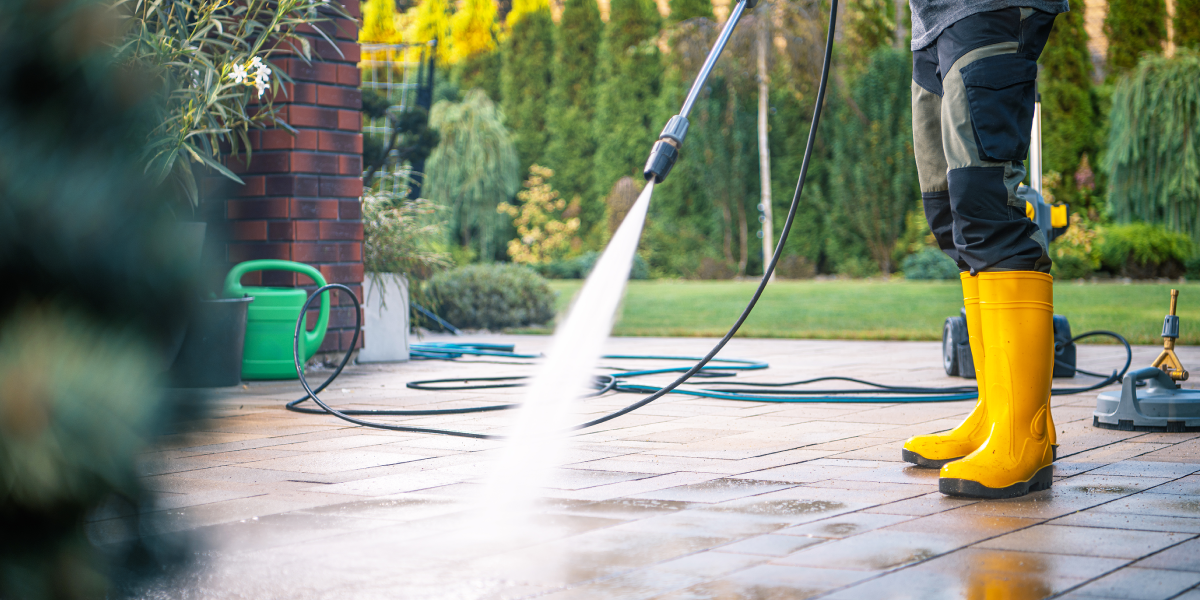
Professional technicians adjust water pressure, temperature, and chemistry to match specific tile substrates.
| Tile Material | Porosity Level | Safe Pressure Range (PSI) | Recommended Cleaning Method | Primary Risk to Avoid |
| Outdoor Porcelain | Non-porous (<0.5%) | 1,800 – 2,200 PSI | Rotary Surface Cleaner + Alkaline Pre-Wash | Excessive pressure on fragile edge trims |
| Bluestone / Basalt | Low-Medium | 1,200 – 1,500 PSI | Moderate PSI Rinse + Deep Pre-Wash | Acidic chemical etching |
| Sandstone | High (Soft) | 400 – 800 PSI | Soft Wash Chemistry + Wide Fan Rinse | Surface gouging & sand grain stripping |
| Travertine / Limestone | High (Soft) | 500 – 1,000 PSI | Neutral Soft Wash + Low PSI Rotary Rinse | Acid damage & face pitting |
| Terracotta | High | 800 – 1,200 PSI | Mild Pre-Wash + Enclosed Surface Cleaner | Flaking glazed layers & edge chipping |
| Concrete Pavers | Medium | 2,000 – 2,500 PSI | High Pressure Rotary Clean + Re-sanding | Blasting joint sand out completely |
Step-by-Step Process: How Professionals Clean Outdoor Tiles
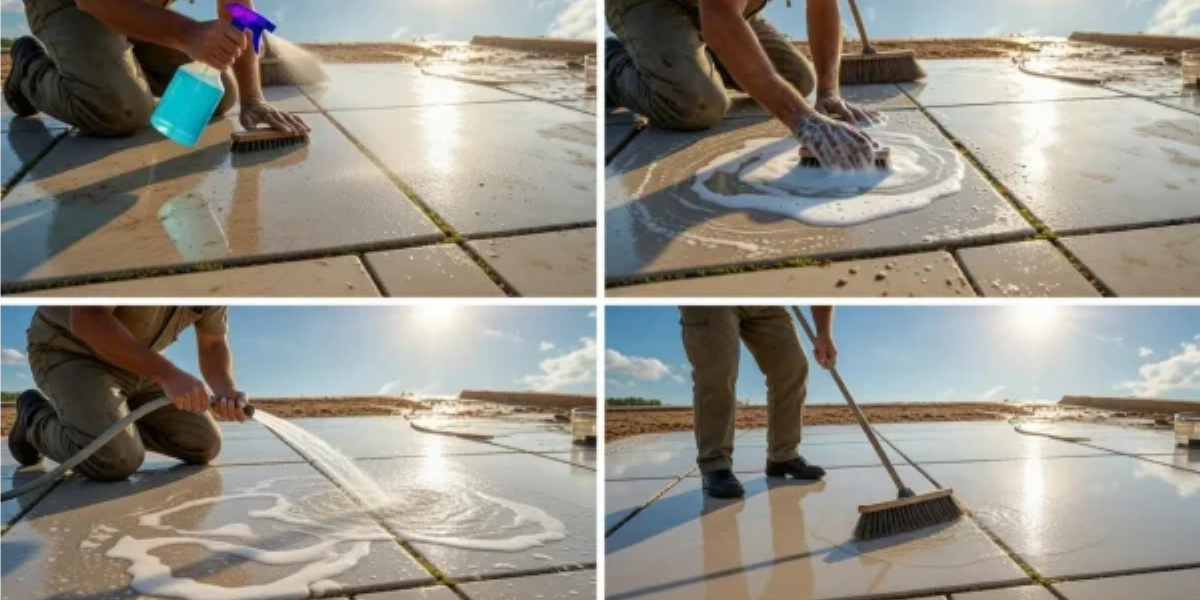
To achieve flawless, streak-free results, professional tile and grout cleaning services follow a rigorous, proven methodology:
6-Step Professional Restoration Workflow
| Step Number | Phase | Equipment & Technique | Core Objective |
| Step 1 | Inspection & Testing | Porosity test & substrate analysis | Determines safe PSI and chemical choice |
| Step 2 | Pre-Treatment | Low-pressure spray with eco-cleaners | Penetrates grout pores and dissolves grime |
| Step 3 | Mechanical Agitation | Counter-Rotating Brushes (CRB) | Loosens stubborn dirt without tile abrasion |
| Step 4 | Hydro-Extraction | Enclosed rotary surface cleaner | Washes uniformly and extracts dirty slurry |
| Step 5 | Neutralization Rinse | Clean water flush | Removes all cleaner residue and loose soil |
| Step 6 | Penetrating Sealer | Breathable fluoropolymer application | Repels water, oils, and future algae growth |
Detailed Execution Guidelines
- Substrate Inspection and Testing: Technicians identify the exact tile substrate, assess grout joint stability, and test surface porosity. This step determines the precise chemical formulations, water temperature, and maximum safe PSI required for the job.
- Application of Eco-Friendly Pre-Treatments: Rather than relying on harsh toxins or raw water pressure, professionals apply non-toxic, pet-safe, biodegradable pre-cleaning agents. These eco-friendly solutions penetrate deep into porous grout and tile micro-cavities, breaking down oils, soil deposits, and organic bio-films.
- Mechanical Agitation: For heavily soiled outdoor tiles, technicians use counter-rotating brush (CRB) machines or heavy-duty floor scrubbers to agitate the pre-treatment solution into the grout lines. This mechanical action loosens stubborn dirt without abrading tile surfaces.
- Enclosed Rotary Hydro-Extraction: Instead of using open spray wands, professionals use commercial rotary surface cleaners. These units feature twin rotating spray bars enclosed inside a domed housing. Operating at controlled pressures, they wash tiles uniformly while vacuum-extracting dirty slurry, preventing overspray onto walls or garden beds.
- Clean Water Neutralization Rinse: The surface is rinsed with clean water to remove all detergent residue and suspended soils, leaving tiles completely clean and neutral.
- Application of Penetrating Sealer: Once the tiles dry completely (typically 24 to 48 hours later), technicians apply an invisible, breathable penetrating fluoropolymer sealer. This barrier coats the interior pores of tiles and grout joints, repelling water, oil-based spills, and algae growth.
| Further reading
▶ How to Whiten Grout Between Tiles: The Ultimate No-Fail Guide ▶ How to Clean Grout Between Floor Tiles: The Ultimate Restoration Guide |
Expert Tips for Preserving Outdoor Tile Integrity
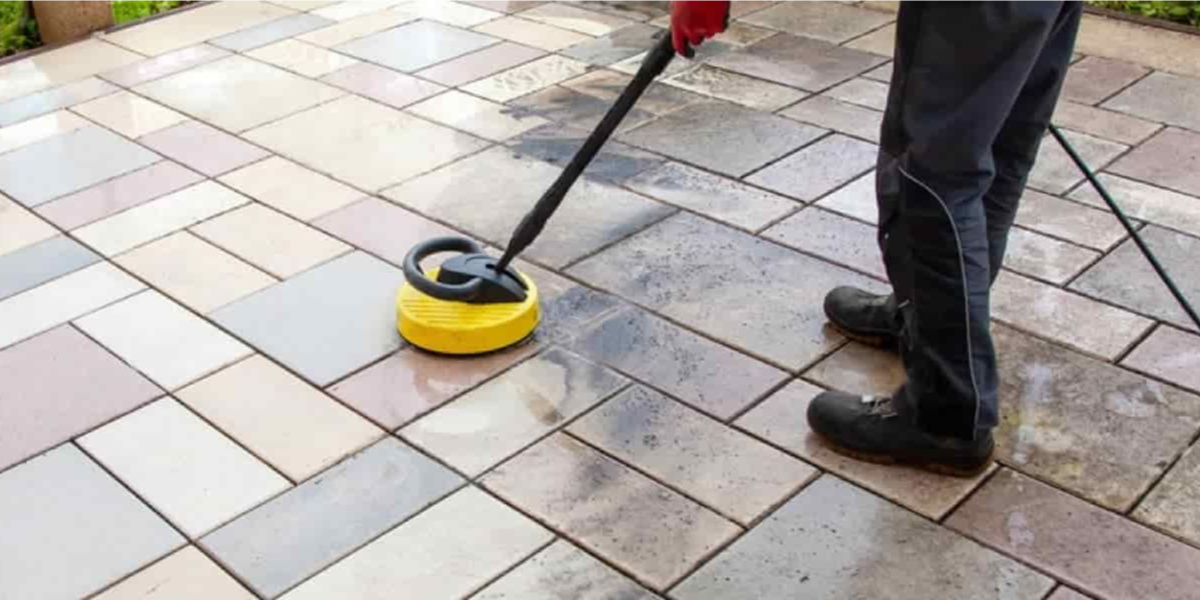
- Clean Diagonally Across Grout Lines: Always sweep cleaning equipment at a 45-degree angle to tile joints to prevent hollowing out cement grout.
- Avoid Muriatic Acid on Natural Stone: Raw acids dissolve calcium-based stones like limestone and travertine instantly. Stick to pH-neutral or specialized alkaline cleaners.
- Keep Surrounding Gardens Moist: When applying cleaning solutions near garden beds, pre-wet foliage with fresh water so overspray dilutes safely without harming plants.
Real-World Example: Restoring a Mornington Peninsula Alfresco Area
A homeowner in Sorrento on the Mornington Peninsula attempted to clean an 80-square-metre sandstone and limestone pool deck using a hired pressure washer. Using a narrow tip at 2,800 PSI, they accidentally created deep wand lines across the limestone and blew out sections of cement grout around the pool coping.
Professional Intervention Strategy
| Assessment Issue | Professional Solution Applied | Result |
| Etched Stone & Streaks | Honed stone using fine diamond abrasive pads | Restored smooth surface texture & removed marks |
| Blown-out Grout Lines | Excavated damaged sections; re-grouted with flexible polymer grout | Restored structural integrity around pool deck |
| Algae & Organic Stains | Applied soft-wash algaecide pre-treatment + low-pressure rinse | Neutralized deep root spores without surface stress |
| Future Protection | Applied dual-coat penetrating fluoropolymer sealer | Created an oil- and water-repellent protective barrier |
Outcome:
The pool deck was fully restored to its original condition within two days, avoiding thousands of dollars in tile replacement costs.
Frequently Asked Questions
How do professionals clean outdoor tiles?
Professionals clean outdoor tiles using a combination of deep-penetrating, eco-friendly pre-treatments, mechanical agitation, and commercial rotary hydro-extraction tools operating at regulated water pressures. This deep-cleaning process lifts embedded grime, organic growth, and stains from tiles and grout without causing surface damage.
What equipment do professionals use to clean outdoor tiles?
Professionals use commercial-grade pressure washing rigs, enclosed rotary surface cleaners, counter-rotating brush (CRB) floor scrubbers, high-volume slurry extraction vacuums, and specialized soft-wash pump applicators designed to distribute eco-friendly cleaning agents evenly.
Is pressure washing safe for all types of outdoor tiles?
No, high-pressure washing is not safe for all tile types. Soft natural stones like sandstone, travertine, and limestone, as well as delicate terracotta and aged grout lines, can erode under high PSI settings. These delicate surfaces require low-pressure soft washing combined with chemical pre-treatments.
How long does professional tile cleaning take?
An average residential outdoor patio clean (50 to 100 square metres) typically takes between 2 and 4 hours to complete. Larger areas, complex stone restorations, or jobs requiring re-grouting and sealing may take longer over a two-day period.
How often should outdoor tiles be professionally cleaned?
Outdoor tiles in Melbourne and the Mornington Peninsula generally benefit from professional tile and grout cleaning once every 12 to 18 months. Regular maintenance removes seasonal leaf tannin buildup and prevents damp winter algae growth from making surfaces slippery.
Restore Your Outdoor Living Space Safely
Taking pride in your home means choosing solutions that protect your property for the long haul. Avoiding common pressure cleaning mistakes preserves your outdoor tiles, protects grout joints, and keeps outdoor living areas looking pristine year after year.
At Tile Cleaners Melbourne, we understand the unique maintenance challenges faced by local homeowners. Servicing Melbourne and the Mornington Peninsula, our experienced technicians use cutting-edge restoration techniques, non-toxic eco-friendly products, and high-power commercial equipment to resolve underlying tile issues safely. We don’t just clean the surface—we protect your investment and improve your home’s value.
Contact our team today for a free quote on professional outdoor tile cleaning and sealing, and discover how easy it is to restore your floors to the day you moved in.

Leave A Comment