
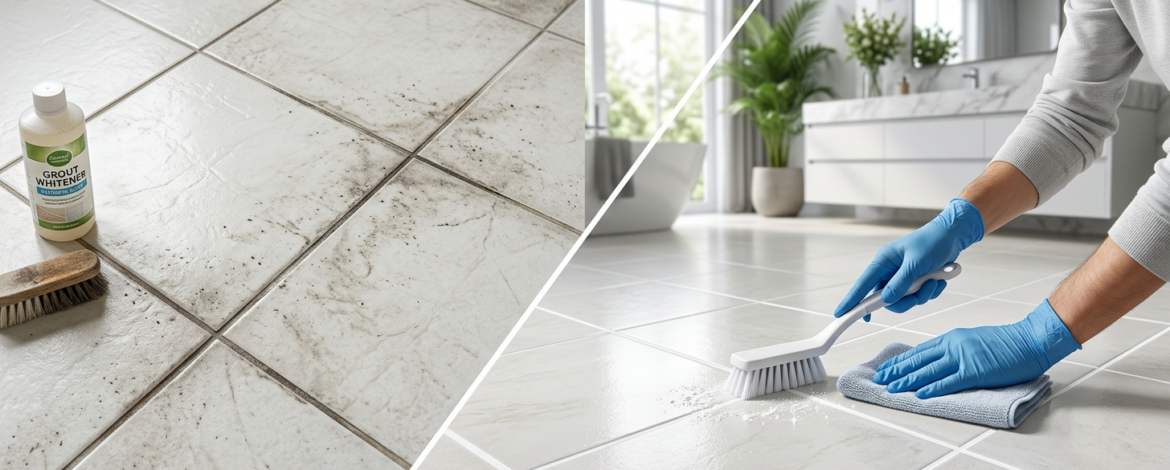
Few things ruin the aesthetic of a beautifully tiled room faster than dingy, discolored grout lines. You spend hours mopping your floors and wiping down your backsplashes, yet the overall space still looks weathered and unkempt. If you are struggling with stubborn stains, learning how to whiten grout between tiles is the fastest way to restore that fresh, modern look to your kitchen, bathroom, or entryway.
Because grout is highly porous, it acts like a sponge for dirt, soap scum, hard water minerals, and kitchen grease. In this comprehensive guide, we will break down the science behind grout discoloration, review the most effective chemical and natural whitening agents, and provide step-by-step instructions to get your floors looking brand new—with or without intense scrubbing.
What is Grout and Why Does It Turn Gray?
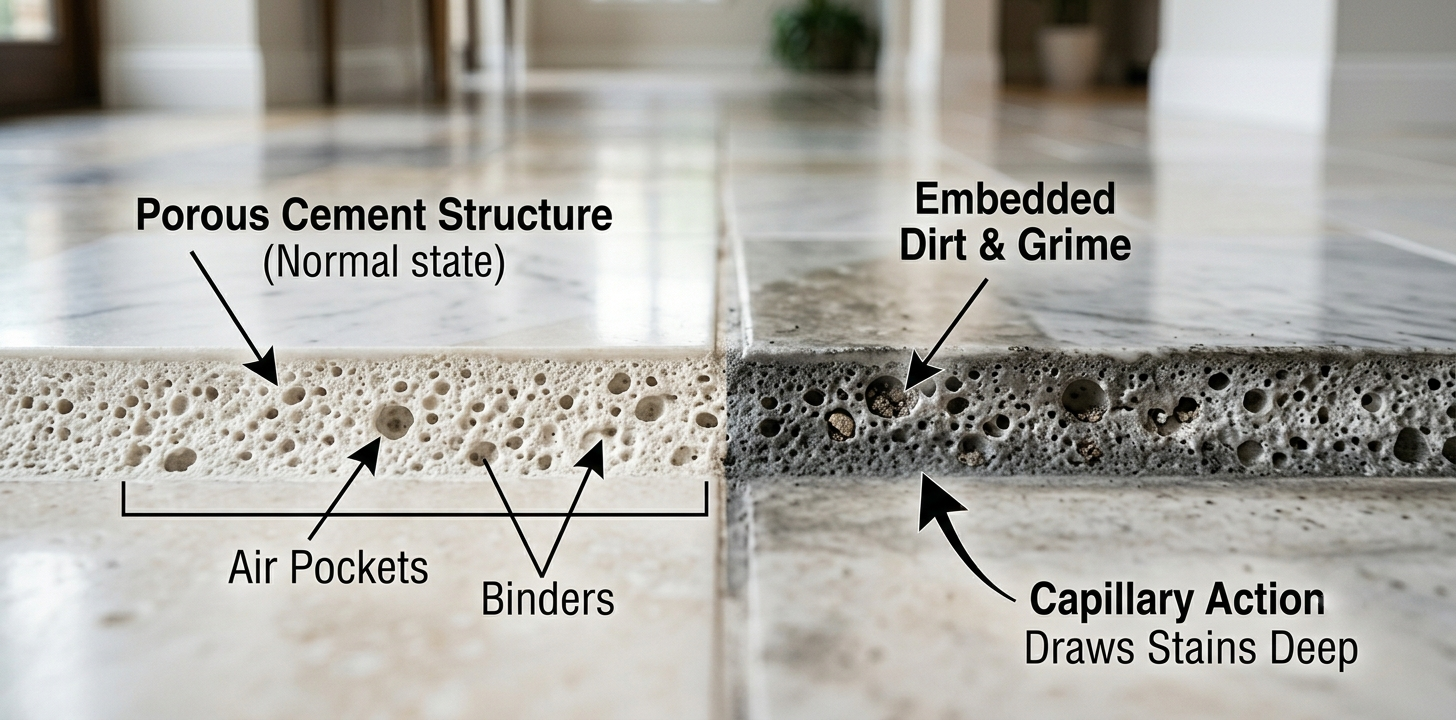
Before grabbing the nearest bottle of bleach, it helps to understand what you are actually cleaning. Grout is typically a mixture of water, cement, and sand (or a fine aggregate for unsanded varieties). It fills the voids between tiles, secures them in place, and prevents fluid from seeping behind or beneath the installation.
Because of its cementitious base, grout is structurally porous. Under a microscope, it looks like a dense sponge filled with microscopic craters.
| Further Reading:
|
Why Grout Discolors So Easily
- Traffic and Dirt Tracker: On floor tiles, daily foot traffic pushes micro-particles of dirt deep into the grout pores.
- Mop Water Saturation: Ironically, traditional mopping can make grout dirtier. Dirty water pools in the recessed grout lines, and as the water evaporates, the concentrated dirt is left behind.
- Mildew and Mold: High-humidity environments like showers host organic growth that stains grout black or green.
- Spills and Kitchen Oils: Cooking grease becomes airborne and settles onto kitchen backsplashes, attracting dust like a magnet.
Quick Answer on How to Whiten Grout Between Tiles
To quickly whiten grout between tiles, apply a paste of equal parts baking soda and hydrogen peroxide directly to the grout lines. Let it sit for 10–15 minutes to break down stains, scrub gently with a stiff nylon brush, and rinse thoroughly with warm water. For stubborn stains, an oxygen-based bleach powder mixed with warm water offers maximum brightening power without damaging the tile structure.
| Further Reading:
▶ How to Clean Grout Between Floor Tiles: The Ultimate Restoration Guide |
Common Mistakes to Avoid When Whitening Grout
When homeowners see dark grout lines, their immediate instinct is often to use the harshest chemicals available. However, aggressive chemical warfare can permanently degrade your tile work. Avoid these critical mistakes:
- Using Wire or Metal Brushes: Wire bristles strip away the top layer of cementitious grout, causing it to crumble over time. Always use nylon or synthetic grout brushes.
- Relying Heavily on Undiluted Chlorine Bleach: While chlorine bleach kills mold, frequent or concentrated use breaks down the binder agents in grout, weakening its structural integrity.
- Mixing Acidic and Alkaline Cleaners: Never mix vinegar (acidic) with bleach (alkaline). This creates toxic chlorine gas.
- Neglecting to Seal Post-Clean: Cleaning only solves half the problem. If you don’t seal the grout once it is dry, it will absorb dirt and stain again within weeks.
The Best Methods to Clean and Whiten Tile Grout
Depending on the severity of your staining, you can choose between gentle DIY mixtures, oxygenated cleaners, or specialized commercial formulas. Here is a breakdown of how to tackle various levels of discoloration.
| Cleaning Agent | Best For | Scrub Level | Safety Level for Tile |
| Baking Soda & Peroxide | General yellowing, light stains | Moderate | High (Safe for all tiles) |
| Oxygen Bleach Powder | Deeply embedded floor dirt, large areas | Minimal | High (Color-safe) |
| Steam Cleaning | Chemical-free sanitation, grease removal | Low | High (Avoid on damaged grout) |
| Grout Pens / Colorants | Permanent Stains, uniform finish | None | High (Topical coat) |
| Further Reading:
▶ Best Non-Toxic DIY Tile Floor Grout Cleaner That Actually Works |
Method 1: The Baking Soda and Hydrogen Peroxide Paste
This is the gold standard for safe, effective DIY whitening. Hydrogen peroxide is a natural whitening agent that breaks down organic stains, while baking soda acts as a mild abrasive to lift surface debris.
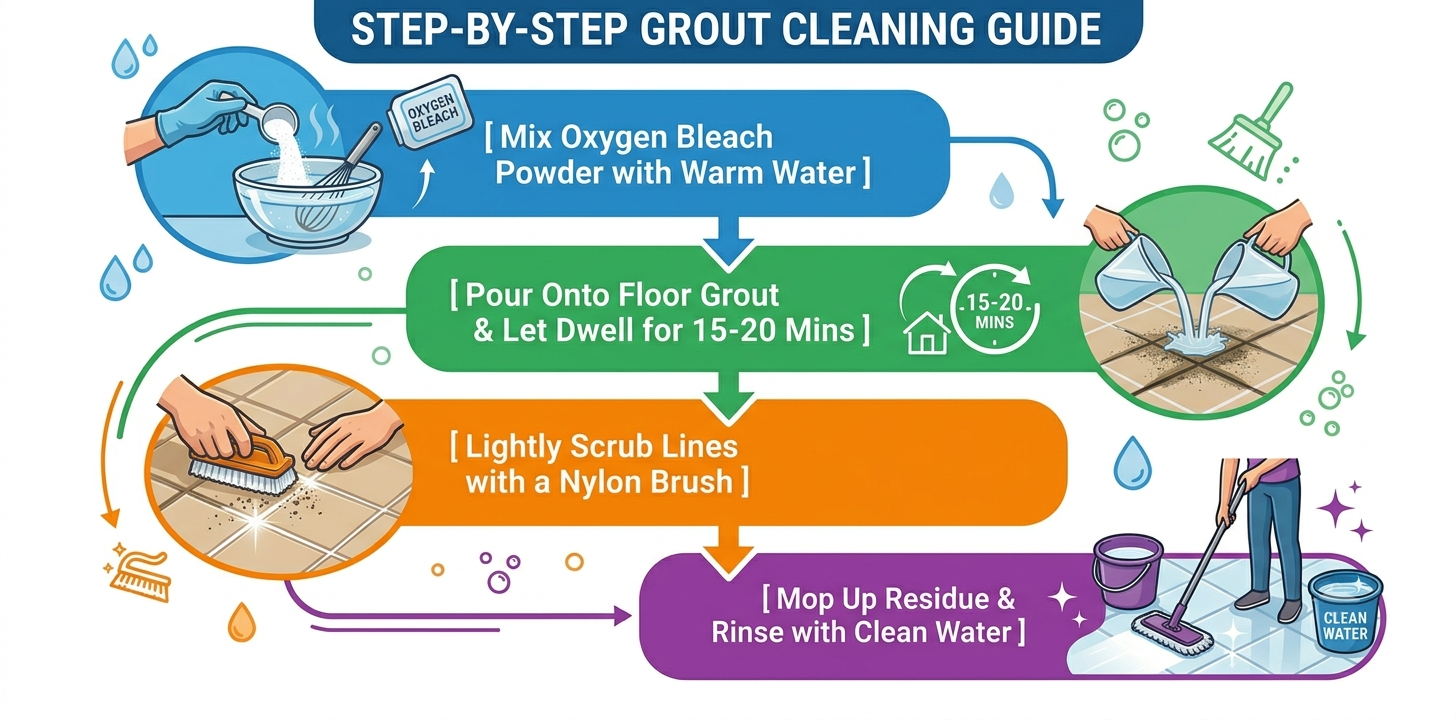
Step-by-Step Instructions:
- Mix the Paste: Combine 2 parts baking soda with 1 part hydrogen peroxide in a small bowl until it forms a thick consistency.
- Apply: Spread the paste generously along the grout lines using an old toothbrush or a dedicated grout brush.
- Dwell Time: Allow the mixture to sit for 15 minutes. You will notice slight bubbling; this means the oxygenation process is lifting the dirt.
- Agitate: Scrub gently in a circular motion to loosen the embedded grime.
- Rinse: Wipe clean with a damp microfiber cloth, rinsing the cloth frequently in warm water.
Method 2: How to Whiten Grout on Floor Tiles Using Oxygen Bleach
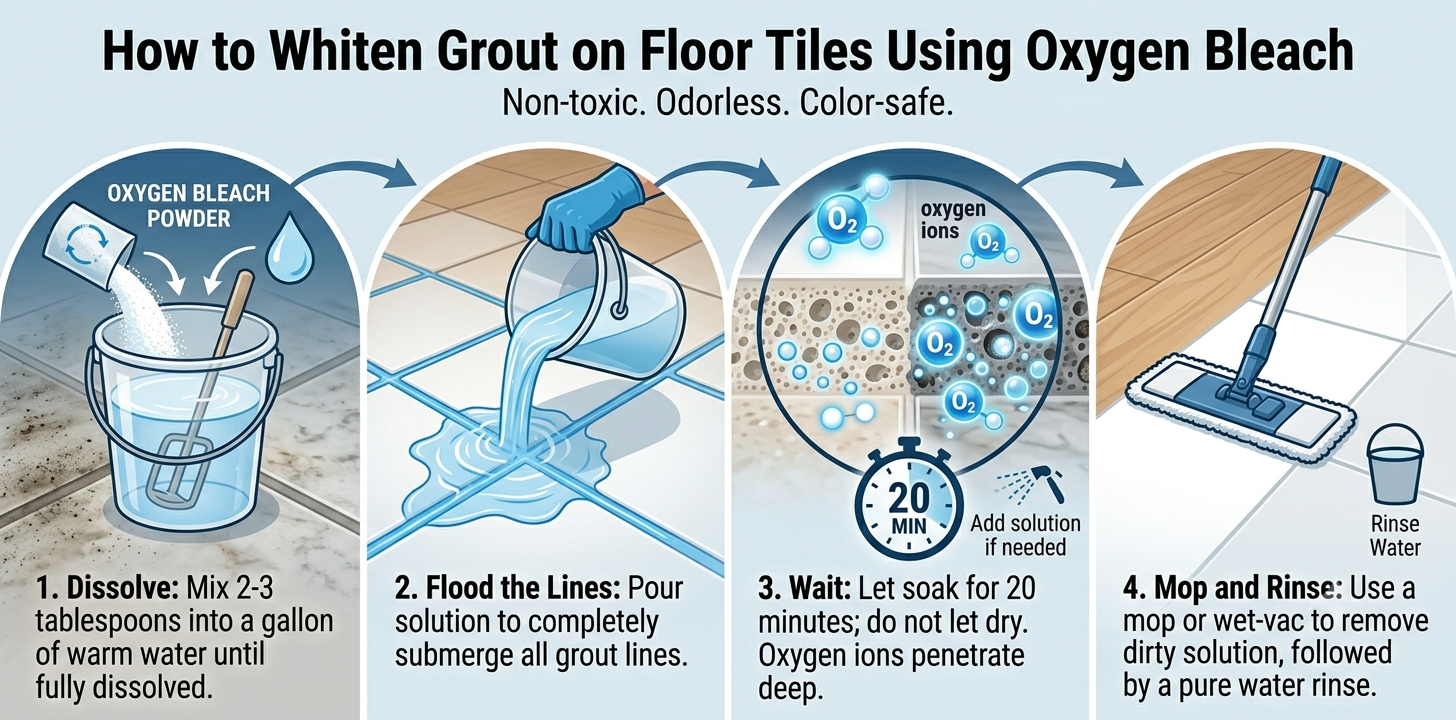
If you have a large living room or kitchen floor, cleaning line-by-line with a paste can be exhausting. Oxygen bleach (such as OxiClean or pure sodium percarbonate) is highly effective for large footprints. It is non-toxic, odorless, and won’t strip the color from colored tile layouts.
- Dissolve: Mix 2 to 3 tablespoons of oxygen bleach powder into a gallon of warm water, ensuring it dissolves completely.
- Flood the Lines: Pour the solution onto the floor sections, ensuring the grout lines are completely submerged.
- Wait: Let it soak for 20 minutes. Do not let it dry out; add a bit more solution if necessary. The oxygen ions will penetrate deep into the porous grout matrix.
- Mop and Rinse: Use a clean mop or wet-vac to remove the dirty solution, followed by a final rinse with pure water.
Method 3: The No-Scrub Steam Method
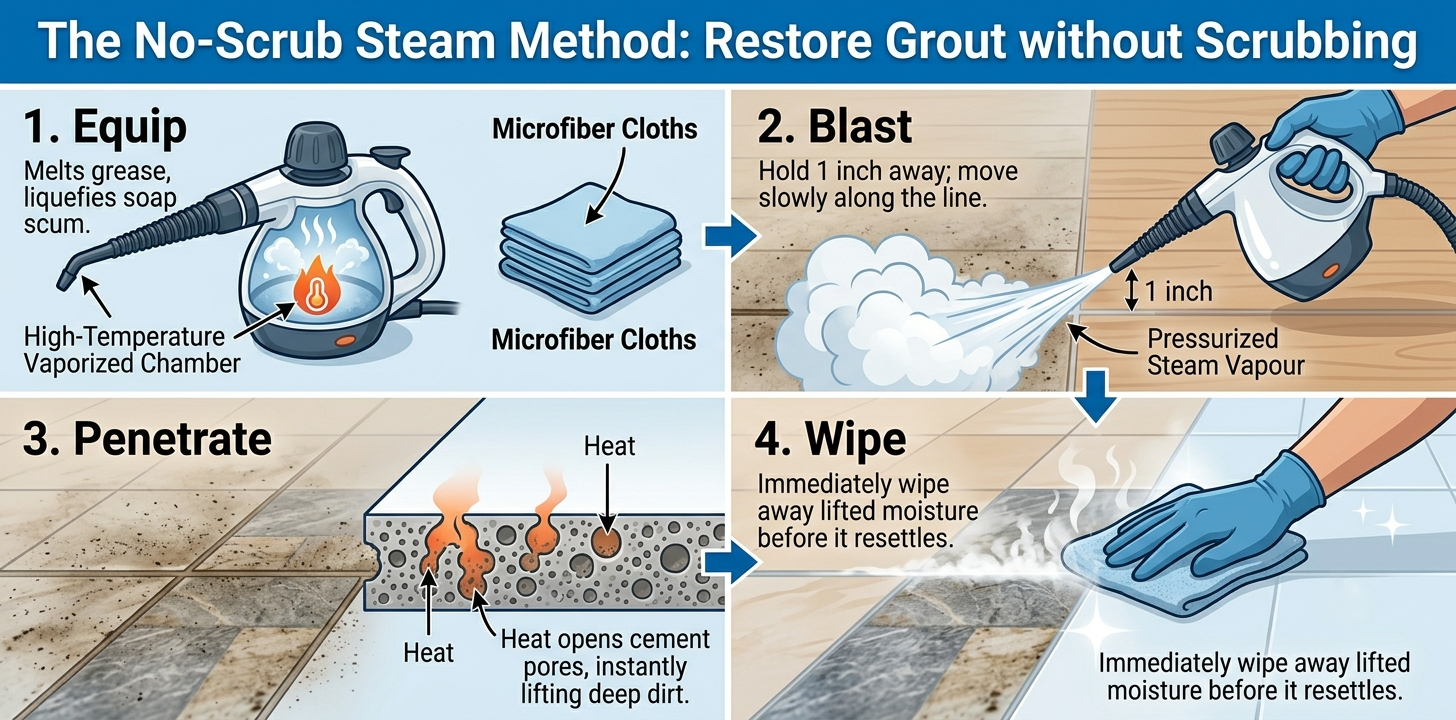
If you want to know how to make grout white again without scrubbing, investing in or renting a handheld steam cleaner is your best option. Steam cleaners utilize pressurized, high-temperature water vapor to melt grease, liquefy soap scum, and blast away dirt particles directly from the grout pores.
- How it works: Hold the detail nozzle of the steam cleaner approximately one inch from the grout line. Move it slowly along the track. The heat opens the pores of the cement, lifting the dirt instantly. Immediately wipe away the blasted-out moisture with a dry microfiber cloth before it can resettle.
Expert Strategies for Permanent Whiteness: Grout Colorants
Sometimes, grout is so deeply stained by rust, red wine, or dye that chemical whitening won’t fully restore it. When this happens, professional tile setters use a grout colorant or epoxy-based grout paint.
Unlike a simple paint, a quality grout colorant sinks into the grout and cures into a waterproof, stain-proof barrier. This allows you to completely shift the color palette back to a brilliant, uniform white while sealing the surface simultaneously.
| Further Reading:
|
Frequently Asked Questions (FAQs)
How do I get my tile grout white again?
To restore tile grout back to its original white state, use an oxygenating agent like hydrogen peroxide mixed with baking soda, or a commercial oxygen bleach solution. These compounds lift the gray discoloration out of the porous cement structure without degrading the surface material.
Does white vinegar turn grout white?
No, white vinegar does not inherently whiten grout, and using it frequently can actually damage it. Vinegar is highly acidic (acetic acid) and dissolves the calcium carbonate found in cementitious grout. Over time, using vinegar causes the grout to etch, wear away, and become more porous, meaning it will trap dirt even faster in the future.
How to lighten grout between tiles?
If your grout has naturally darkened from everyday wear, lighten it by applying a concentrated solution of sodium percarbonate (oxygen bleach) or by running a high-pressure steam cleaner along the joints. If the grout was originally mixed as a dark gray or beige, you can only lighten it by applying an opaque, white epoxy grout colorant over the top.
How to make grout white again without scrubbing?
The most reliable way to whiten grout without physical scrubbing is by using a specialized home steam cleaner equipped with a detail nozzle. The pressurized heat melts away discoloration instantly. Alternatively, applying a thick layer of a commercial foaming gel cleaner containing oxygen bleach allows chemical action to lift stains without mechanical agitation.
Conclusion and Next Steps
Mastering how to whiten grout between tiles doesn’t require expensive professional intervention. By utilizing oxygenated cleaners, giving products adequate dwell time, and choosing the right mechanical tools like nylon brushes or steam cleaners, you can lift decades of grime easily.
Once your grout lines have dried completely and look brilliantly white, don’t forget the final, most crucial step: apply a high-quality fluoropolymer grout sealer. Sealing your grout creates an invisible, hydrophobic barrier that prevents dirt and liquids from penetrating the pores, ensuring your hard work lasts for years to come.
Ready to give your space a fresh look? Grab a bottle of hydrogen peroxide and a box of baking soda this weekend, and watch your tile surfaces transform!

Leave A Comment