
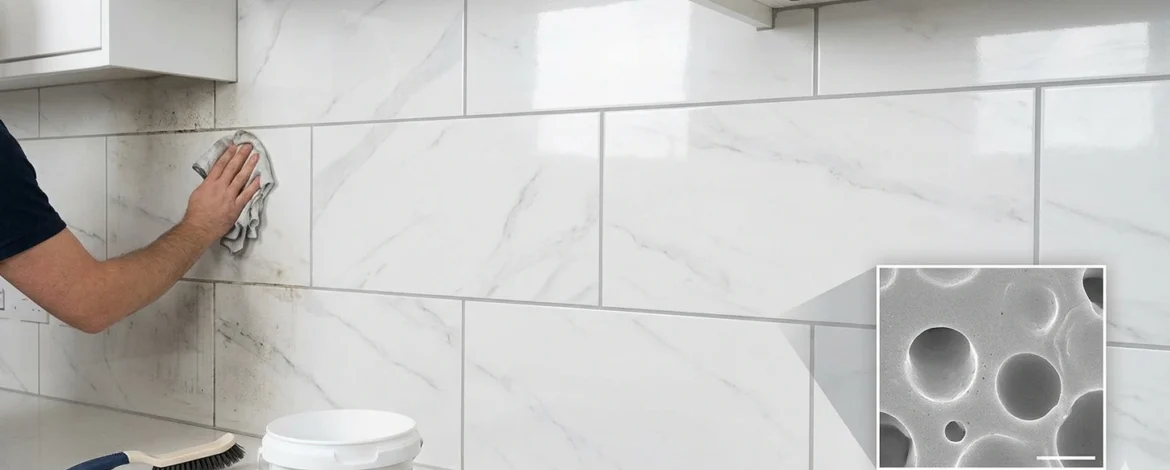
Few things ruin the aesthetic of a beautiful kitchen or bathroom faster than dingy, discolored grout lines. You can scrub your ceramic or porcelain tiles until they shine, but if the borders between them are stained, the whole room still looks dirty.
Learning how to deep clean tile grout doesn’t just improve your home’s appearance; it also protects your investment by preventing moisture damage and mold growth.
Because grout is highly porous, it acts like a sponge for muddy mop water, cooking grease, and soap scum. If you are struggling with darkened floor lanes or stubborn bathroom mildew, you aren’t alone. This comprehensive guide will walk you through the most effective, expert-tested methods to deep clean tile and grout, outlining what works, what to avoid, and how to keep it pristine for years to come.
Quick Guide: How to Clean Really Dirty Tile Grout Fast
If you are looking for a rapid, high-level summary to fix your grout lines immediately, use this tested tiered strategy.
- For Light Stains: Mix equal parts warm water and distilled white vinegar in a spray bottle. Let sit for 5 minutes, scrub with a nylon brush, and rinse.
- For Deep, Stubborn Stains: Create a thick paste of baking soda and water. Apply to grout, spray with vinegar over the top until it fizzes, wait 10-15 minutes, scrub vigorously, and wipe clean.
- For Mold and Mildew: Mix 1 part oxygen bleach powder with 2 parts warm water. Apply to the lines, let it sit for 15 minutes to break down the spores, scrub, and rinse thoroughly.
| ⟢ FURTHER READING: |
What is Tile Grout and Why Does It Get So Dirty?
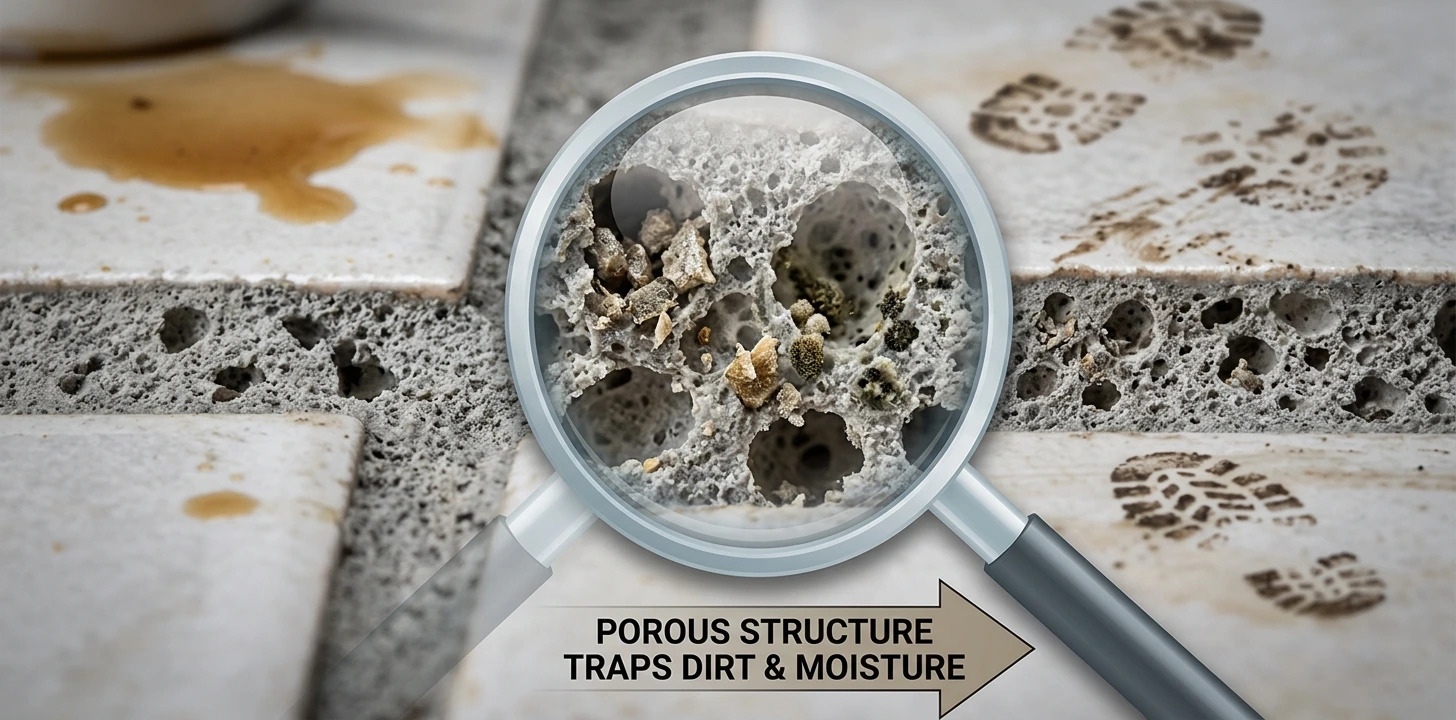
Grout is a dense mixture of water, cement, and sand (or a fine powder for narrow joints). It fills the spaces between tiles, stabilizes the installation, and prevents water from seeping behind or beneath the flooring layout.
Because cement-based grout is inherently porous and textured, it features millions of microscopic pockets. When you mop a floor, dirty water doesn’t disappear; a portion of it settles into these low-lying grout lines. Over time, walking across the floor embeds dust, oils, and soils deep into the matrix. In wet environments like showers, body oils and soap residues bond to the surface, creating a perfect breeding ground for mold and mildew spores.
Knowing how to clean dirty grout in floor tiles requires breaking down these organic bonds without eroding the cement structure holding the floor together.
| ⟢ FURTHER READING:
How to Whiten Grout Between Tiles: The Ultimate No-Fail Guide |
The Benefits of Deep Cleaning Your Grout
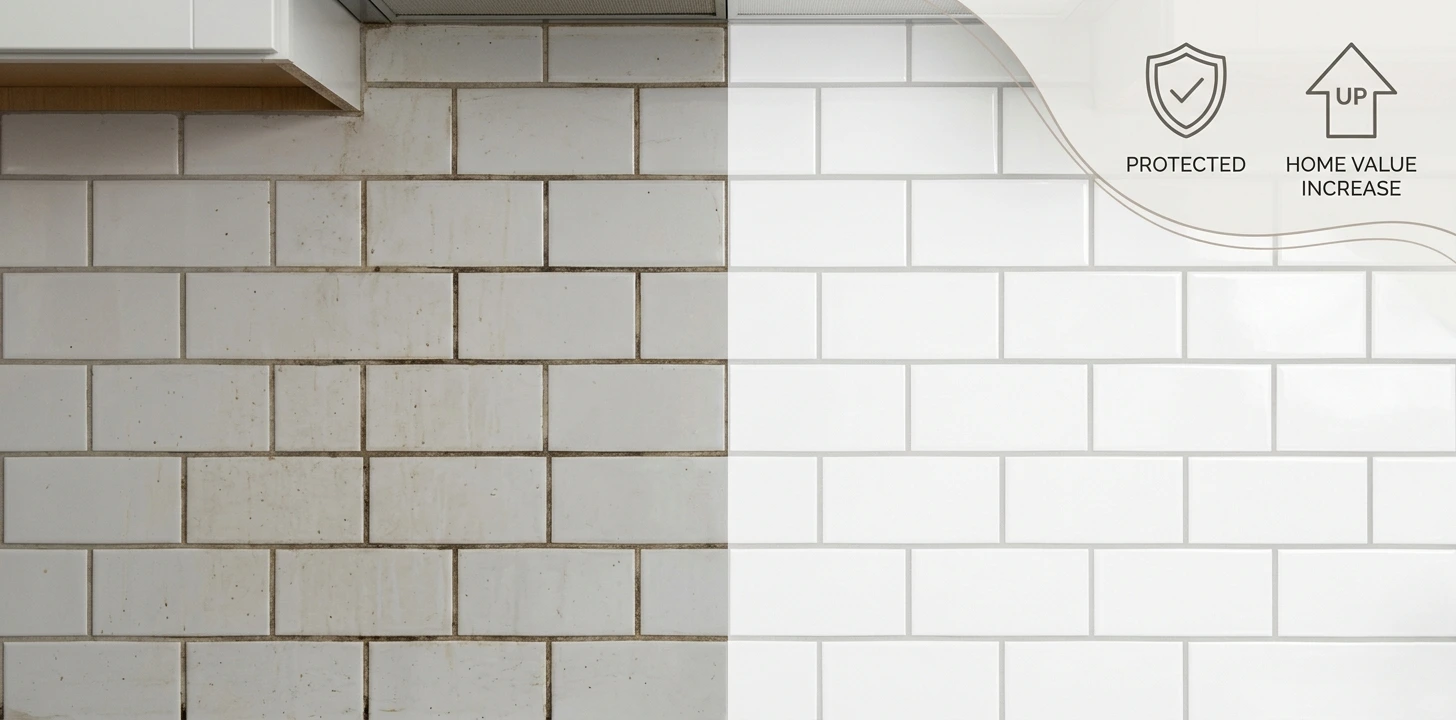
Skipping this chore does more than just hurt your home’s visual appeal. Investing the time to deep clean tile and grout offers structural and sanitary rewards:
- Extends Tile Lifespan: Dislodging embedded grit prevents the grout from cracking, crumbling, and loosening over time, saving you from costly retiling projects.
- Improves Indoor Air Quality: Showers and kitchens are prime targets for fungal growth. Deep cleaning eradicates hidden mold spores that can aggravate allergies.
- Boosts Home Value: Sparkling clean floors and bathrooms are critical for staging if you plan to sell. Clean grout gives an immediate impression of a well-maintained home.
Common Mistakes to Avoid When Cleaning Grout
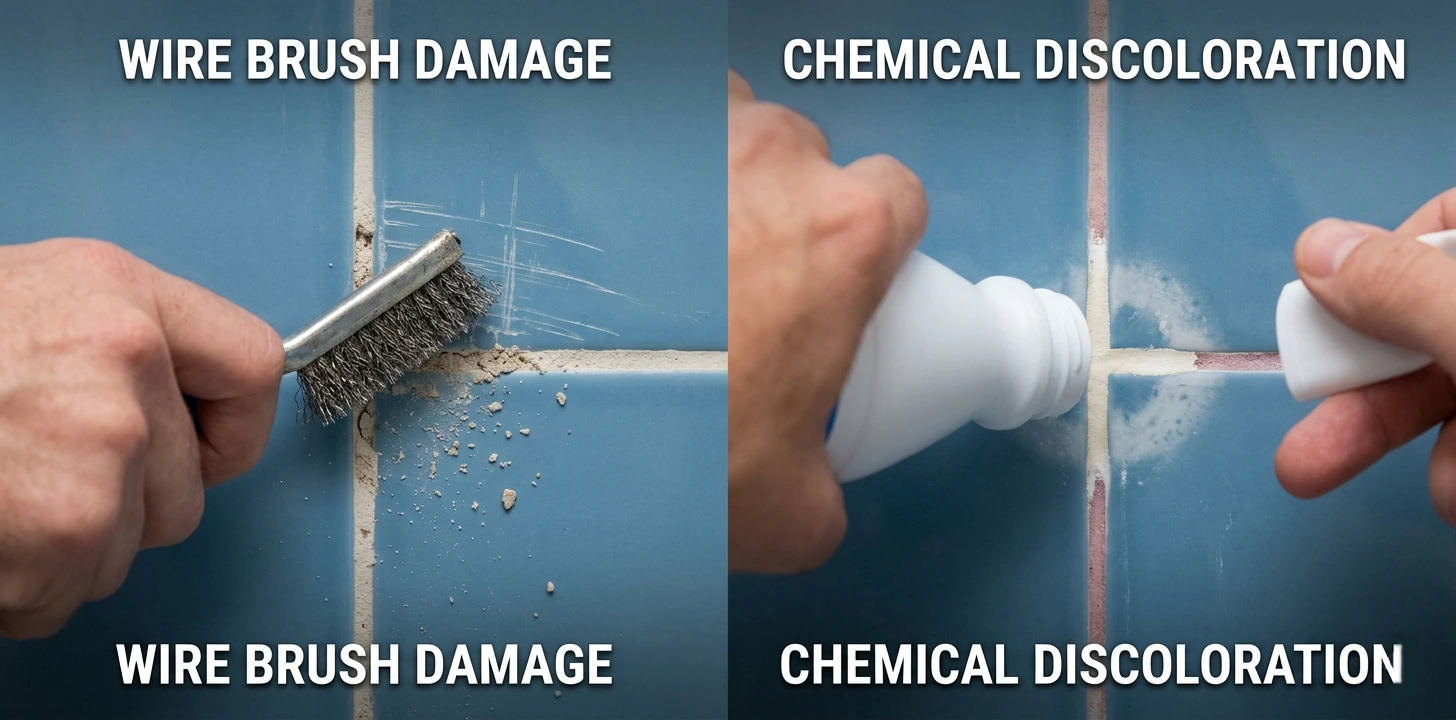
Before grabbing your cleaning caddy, understand that grout can be easily damaged by improper chemical applications. Avoid these structural pitfalls:
1. Using Metal Wire Brushes
While a stiff brush is necessary, never use brass or steel wire brushes. They scratch porcelain finishes and can physically gouge out chunks of cement-based grout. Stick strictly to stiff nylon bristles.
2. Overusing Pure Chlorine Bleach
While liquid chlorine bleach kills surface mold, using it continuously or in high concentrations weakens cementitious grout, causing it to crumble over time. It can also discolor darker colored grouts permanently.
3. Relying Constantly on Harsh Acids
Strong acids (like industrial muriatic acid or even overused, undiluted vinegar) dissolve a microscopic layer of the grout to reveal a clean surface. Do this too often, and you will slowly eat away your floor joints.
| ⟢ FURTHER READING: |
The Ultimate Grout Cleaning Hierarchy: From Mild to Wild
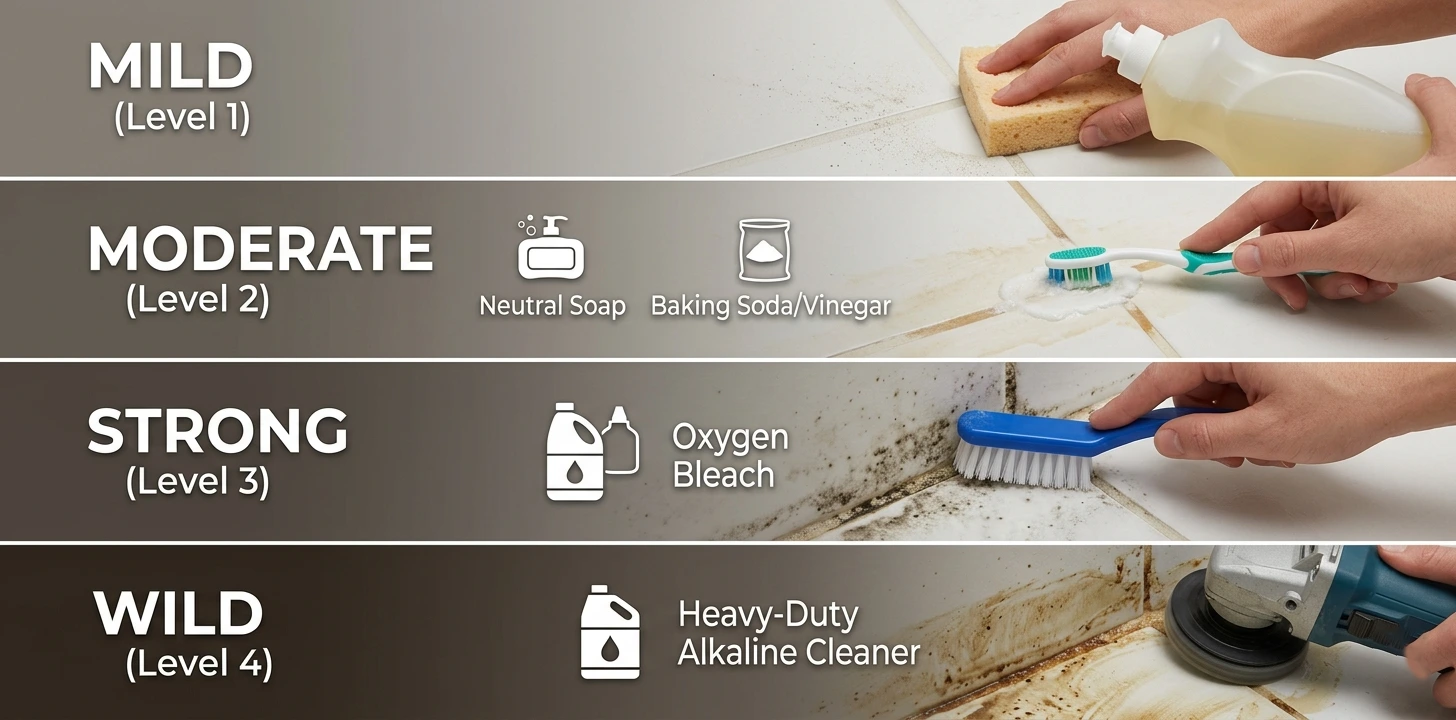
When handling home maintenance, always start with the gentlest method first. If the stains persist, move down the list to stronger chemical reactions.
Grout Cleaning Methods Matched to Stain Severity
| Method | Best For | Pros | Cons |
| Warm Water & Nylon Brush | Minor surface dust and loose debris | Zero chemical wear, completely free | Won’t remove deep oil or dark stains |
| Baking Soda & Vinegar (DIY) | General floor discoloration, light grease | Inexpensive, non-toxic, eco-friendly | Requires manual scrubbing effort |
| Oxygen Bleach (Oxygenated Powder) | Deep organic stains, light colored grout | Disinfects safely, brightens lines | Needs 10-15 minutes of dwell time |
| Commercial Alkaline Cleaners | Heavy grease, neglected kitchen floors | Cuts through old grease quickly | Chemical fumes, requires good ventilation |
| Steam Cleaning Machines | 15+ year old grout, ground-in soot | No chemicals needed, sanitizes deeply | Requires buying or renting a machine |
| ⟢ FURTHER READING: |
Step-by-Step Guide: How to Deep Clean Tile Grout
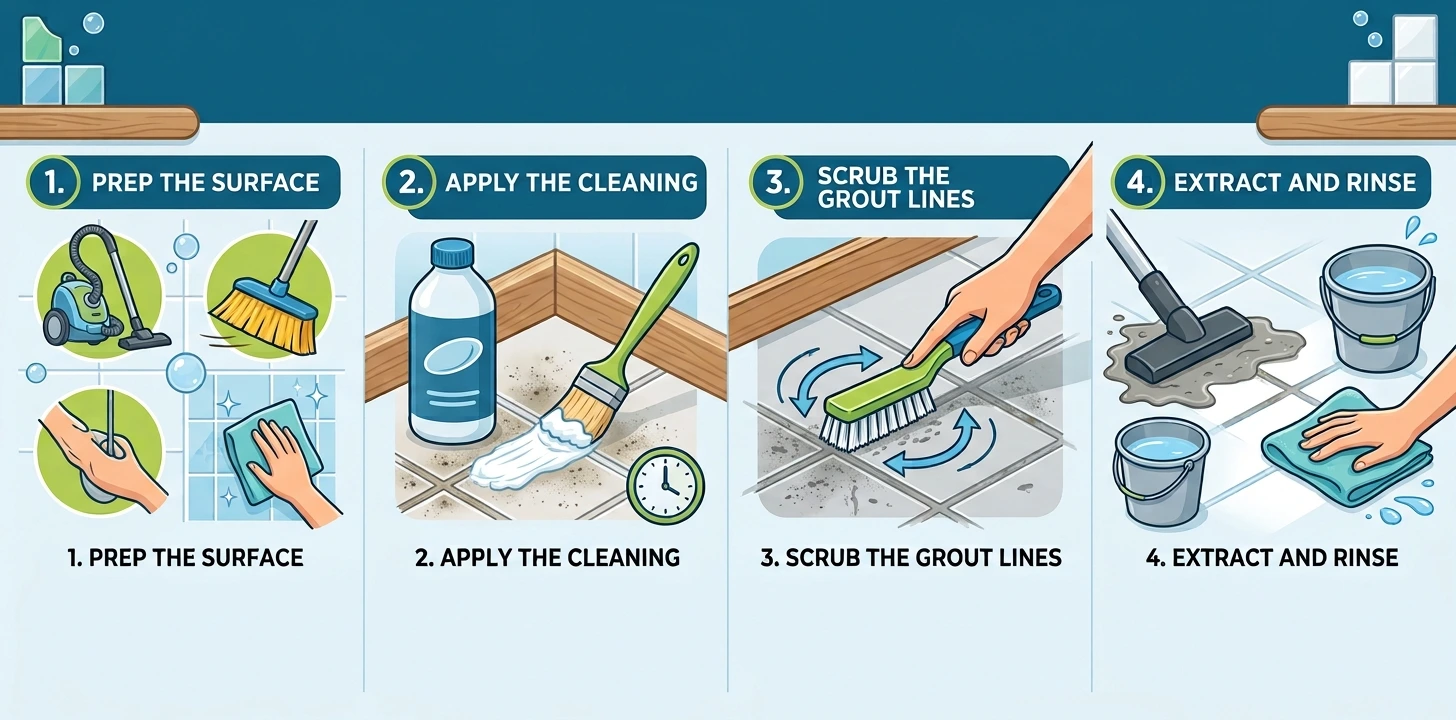
Follow this sequence to safely clean old tile grout and restore its original hue.
- Prep the Surface:
Vacuum or sweep the tiled area thoroughly to remove all loose hair, dust, and grit. If cleaning a shower wall, wipe down the tiles with a dry microfiber cloth to remove surface moisture.
- Apply the Cleaning Solution:
Mix your chosen cleaner (such as an oxygen bleach paste or a specialized commercial alkaline grout cleaner). Apply it directly to the grout lines. Let it sit for 10 to 15 minutes. This dwell time allows the solution to penetrate the microscopic pores and lift old oils.
- Scrub the Grout Lines:
Use a specialized grout brush or a stiff-bristled nylon toothbrush. Scrub in small, circular motions along the lines rather than just a straight back-and-forth motion. This helps dislodge debris from all angles of the textured joint.
- Extract and Rinse:
Do not just mop over the area, as this pushes the dirty slurry back into the pores. Use a wet-dry vacuum or a clean microfiber cloth to absorb the lifted sludge directly. Rinse the area thoroughly with clean, warm water and wipe dry.
Expert Tips for Maintaining Pristine Grout
- Seal It Annually: Once your grout is completely dry and clean, apply a high-quality penetrating grout sealer. The sealer fills the microscopic voids, making the surface hydrophobic so liquids bead up rather than soaking in.
- Ditch the Traditional String Mop: Flat microfiber mops are far superior. Traditional mops act as squeegees that drop dirty reservoir water directly into the lower-set grout lines.
- Run the Exhaust Fan: Leave your bathroom fan running for 20 minutes after every shower to drop humidity levels below the threshold where mold can thrive.
| ⟢ FURTHER READING: |
Frequently Asked Questions
How do you clean really dirty tile grout?
To clean highly neglected or how to clean dirty grout on floor tiles, use a professional-grade alkaline grout cleaner or an oxygen bleach powder dissolved in warm water to form a paste. Avoid acidic cleaners on a regular basis as they can slowly degrade the cement binder. Let the paste sit for 15 minutes, scrub with a stiff nylon brush, and use a wet vacuum to pull the suspended dirty water out of the floor grooves before it can settle back in.
How do I get my grout white again?
If your grout was originally white or off-white and has turned grey or brown, you need an oxidizing agent. Mix oxygen bleach powder (sodium percarbonate) with warm water to activate it. Apply it generously to the joints and let it sit for 15 to 20 minutes. The oxygen bubbles will physically lift deep organic discoloration. For absolute uniformity on permanent stains, you can look into an epoxy-based grout colorant pen to paint and seal the lines.
How do you clean light colored grout in a bathroom that is 18 years old?
When dealing with how to clean light colored grout in a bathroom that is 18 years old, standard surface sprays won’t cut it. The best solution here is localized heat and pressure via a steam cleaner fitted with a small nylon brush nozzle. The high-temperature steam vapor penetrates deep into the nearly two-decade-old porous structure, instantly emulsifying old soap scum, hard water scale, and embedded body oils without requiring harsh acids that could destroy the aging grout.
How do I get mold out of the grout in my shower?
Shower mold feeds on residual soap scum and skin cells in damp environments. To kill the root system of the mold, spray the area with an anti-fungal treatment or a solution of oxygen bleach. For deeply embedded black mold that has worked its way beneath the surface layer, you may need to apply a specialized mold-remover gel that clings to vertical wall lines overnight, followed by a thorough rinse and the application of a fresh silicone caulk or grout sealer once dried.
Conclusion
Mastering how to deep clean tile grout requires a balance of patience, proper dwell times, and the right tools. By staying away from wire brushes and keeping acidic cleaners to a minimum, you protect the structural integrity of your tile layout while completely refreshing its visual impact. Regular vacuuming, swapping out old string mops for flat microfiber alternatives, and applying a protective penetrating sealer once a year will keep your floors looking pristine with minimal daily scrubbing.
Ready to transform your home’s tiled surfaces? Start with a simple eco-friendly baking soda mix today, or look into a targeted steam cleaner treatment to bring those high-traffic rooms back to life.

Leave A Comment